The Sidney Nolan Trust and Chelsea Arts Club Trust Printmaking Award 2026:
‘Three weeks in residency at the rural centre for the arts, founded by Sir Sidney Nolan RA. Sheila Woollam is the inaugural recipient of this new Chelsea Arts Club Trust residency, in partnership with the Sidney Nolan Trust, supporting innovation in print practice and exchange between London and an area of arts sparsity.’
The Rodd: rural centre for the arts
Home of Sidney Nolan RA, Presteigne, Powys.
Being awarded a three-week residency in an unfamiliar place filled me with both excitement and trepidation. My earlier self-directed residencies were rooted in myths I knew, landscapes I had chosen, and histories I could readily connect with. The Rodd, located in Herefordshire near the border with Wales, offered none of these familiar comforts; instead, it presented a different kind of challenge, one of responding to the unknown.
While researching the area and its landscape, I came across the Hindwell Basin and its Neolithic palisaded enclosure. Although intriguing, it struggled to hold my attention: it felt too vast, too distant. It was only when I turned to old maps that something began to resonate. The springs, wells, and rivers gradually drew me in. The Rodd sits close to the Hindwell Brook, which flows into the River Lugg just a few miles away at the hamlet of Combe. A confluence, why should that excite me? The idea of two rivers meeting and merging, the intermingling of spirit and essence, offered something tangible to engage with. It captured my imagination and gave me a place to begin.
Confluence
Where the Hindwell Brook meets the River Lugg
Then came the folklore. As I explored the region’s myths, I discovered stories of dragons, blue-footed women, tailless sows, and a cantankerous-sounding mermaid. With my interest in the local rivers already piqued, learning that the mermaid inhabited the Lugg made my decision even simpler. Here was an opportunity to examine the mermaid in art, to understand her role in myth and her relationship to the lost goddesses of Celtic times.
My interpretation of the Marden Mermaid differs from the typical mermaid trope, existing somewhere between myth and reality. Merging into imagined water, she embodies the enchantment of an ancient sea siren clinging onto what appears to be a sacred Celtic bell. A sense of place was conveyed through video footage captured at the rivers' confluence and audio recorded outside Marden's parish church. Further reading on the history and the making of the Marden Mermaid can be found here.
Mermaid Development
In line with my art practice and to establish a connection with the landscape surrounding Presteigne, I researched the area's folklore. As I explored the region’s myths, I discovered stories of dragons, blue-footed women, tailless sows, and water deities.
One tale kept appearing in my searches, a tale of a mermaid who dwelt in the River Lugg beside the church in Marden. Although the village is some twenty-two miles from Presteigne, the Hindwell Brook, which runs through the Rodd’s land, joins the River Lugg not more than a mile away.
With my interest in the local rivers already piqued, learning that the mermaid inhabited the Lugg made my decision even simpler. Here was an opportunity to examine the mermaid in art, to understand her role today, and to explore her relationship to the lost goddesses of Celtic times.
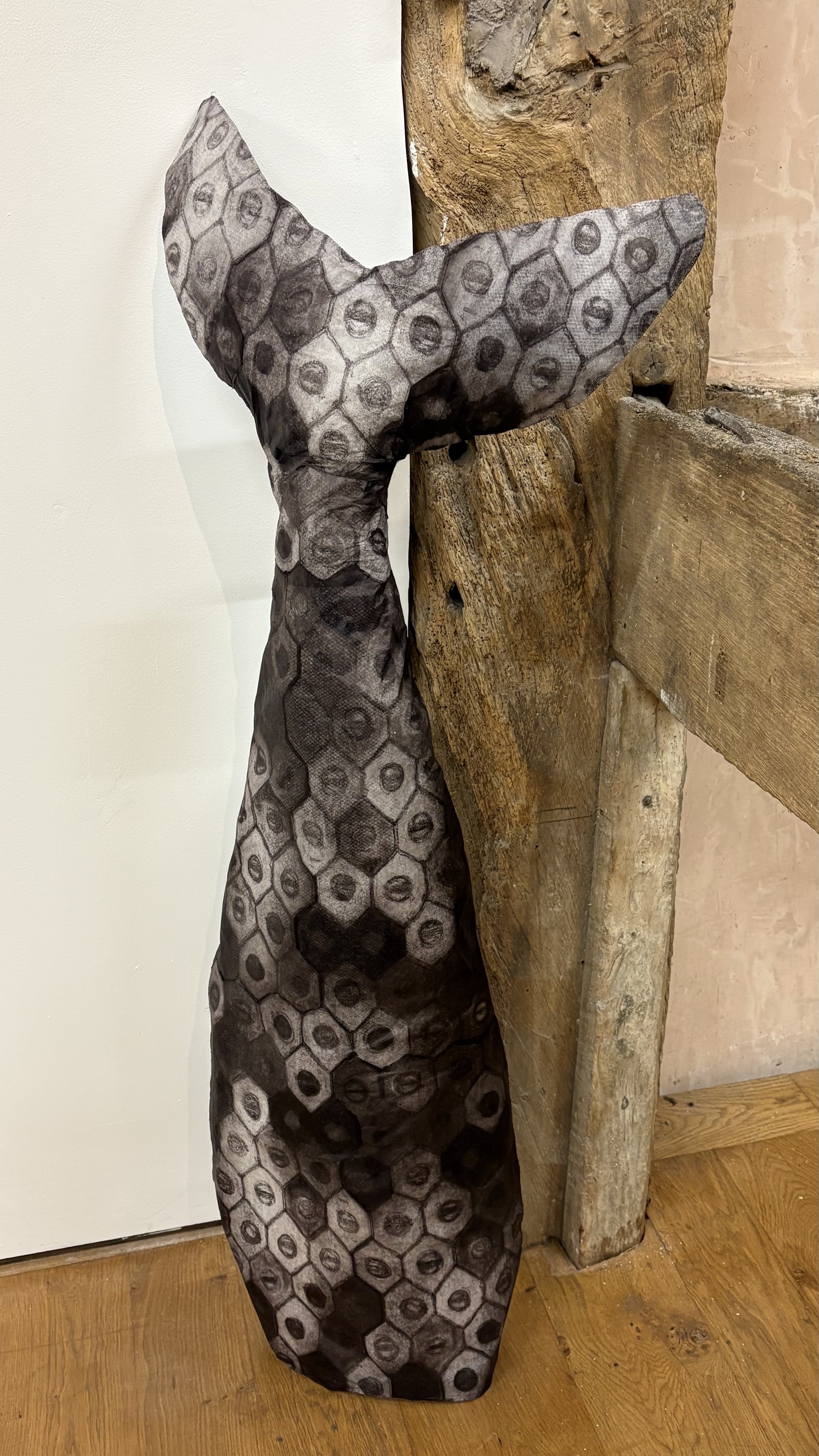
Mermaid Construction The tail.
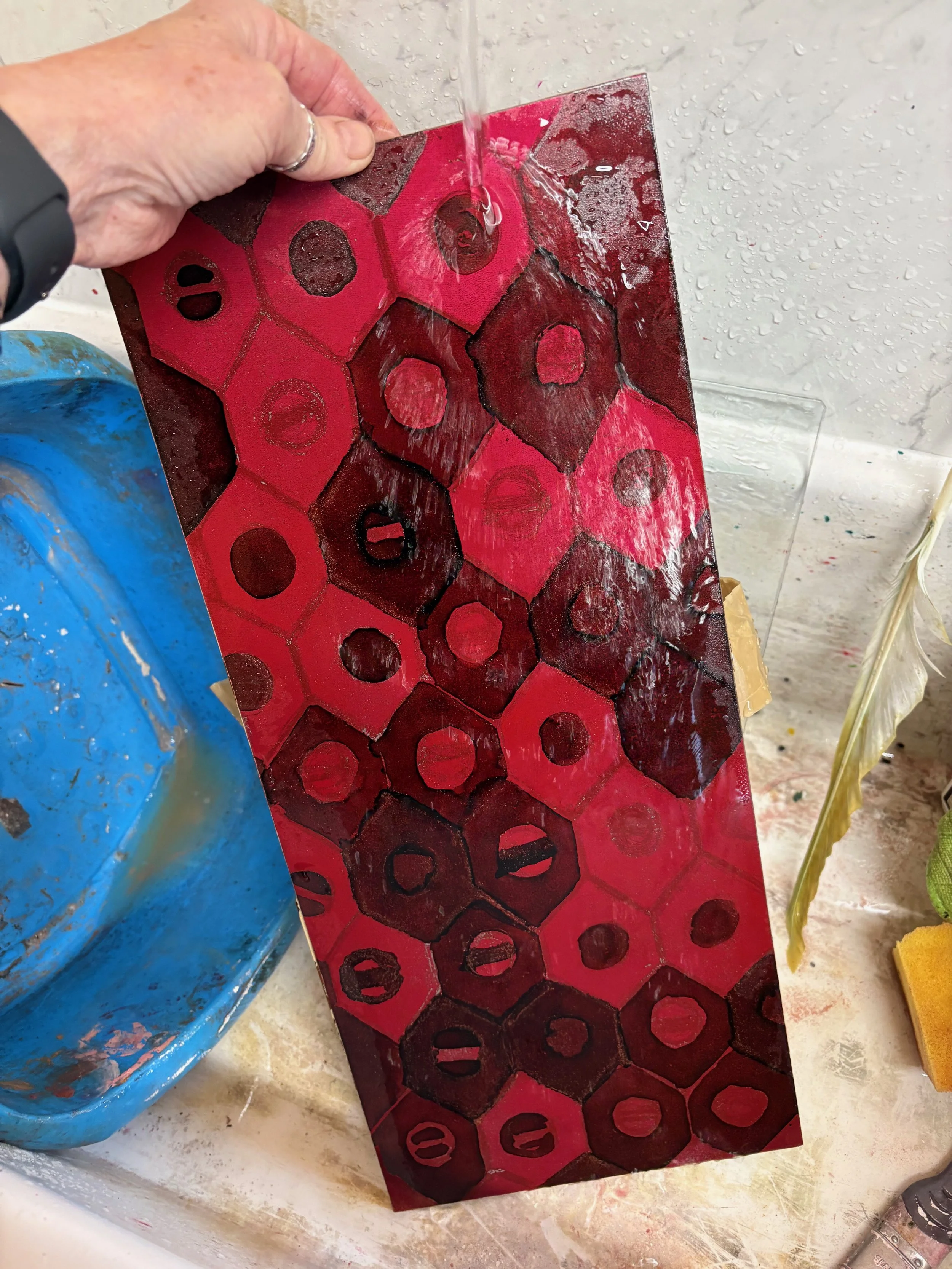
Mermaid Skin Etching the Plate
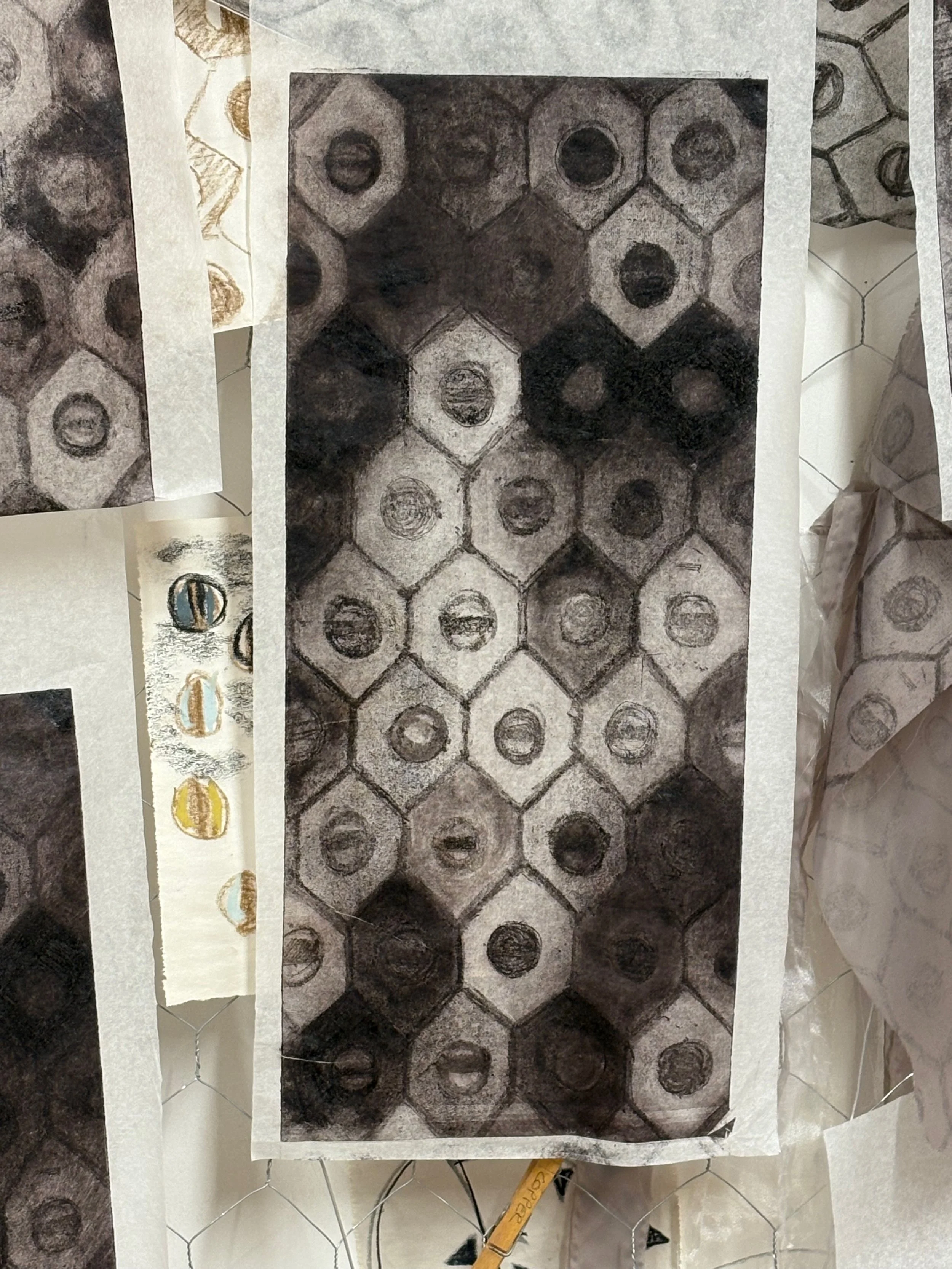
Mermaid Skin Printing onto tracing paper
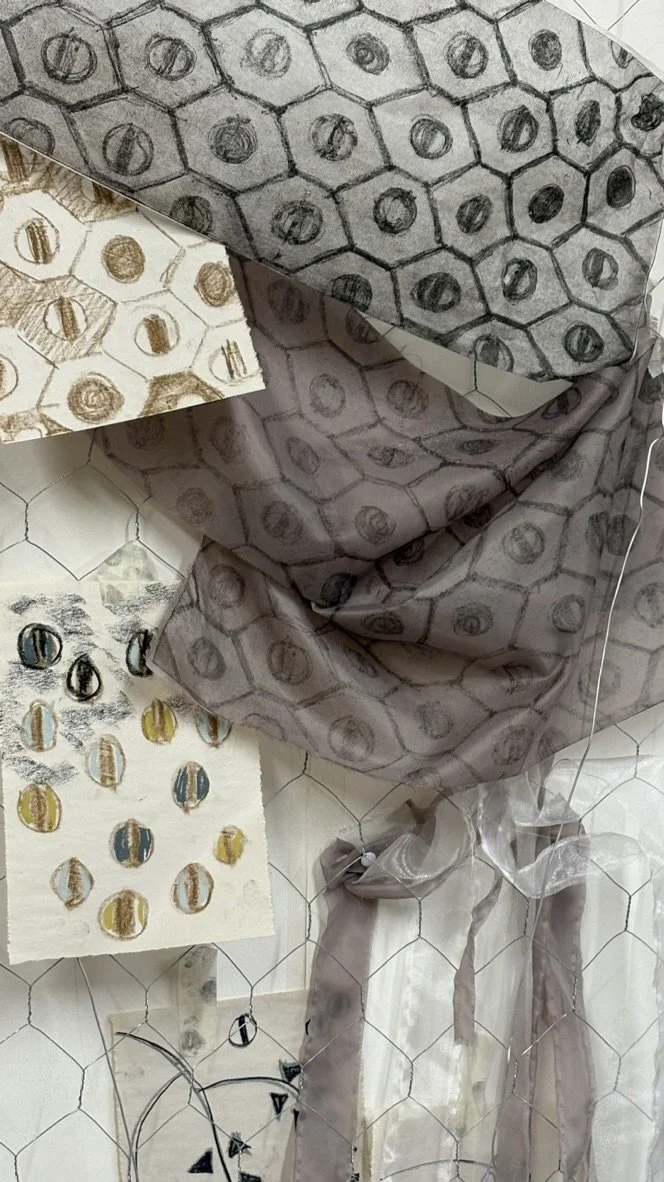
Mermaid Construction Skin pattern on fabric
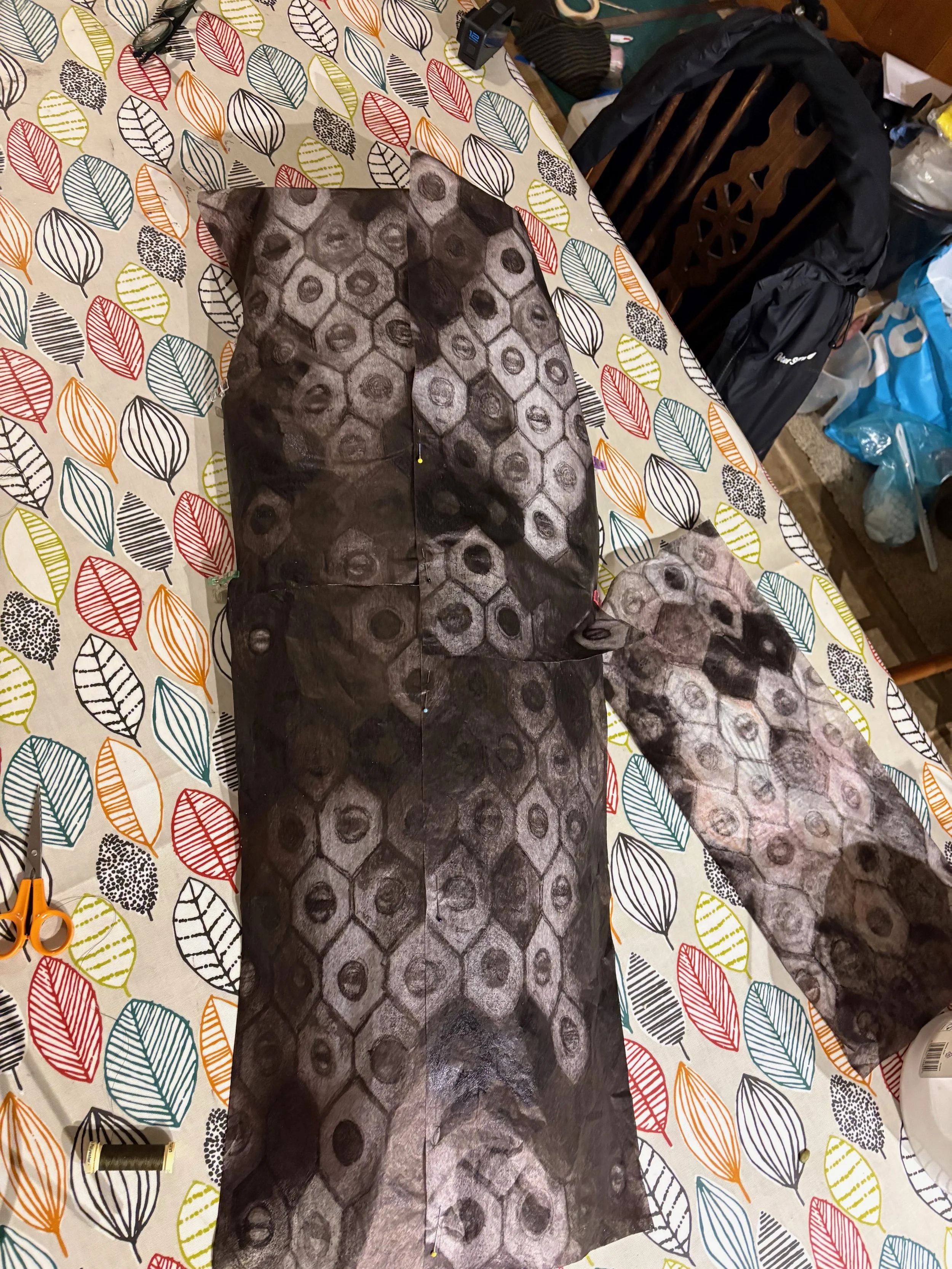
Mermaid Construction Skin on metal form
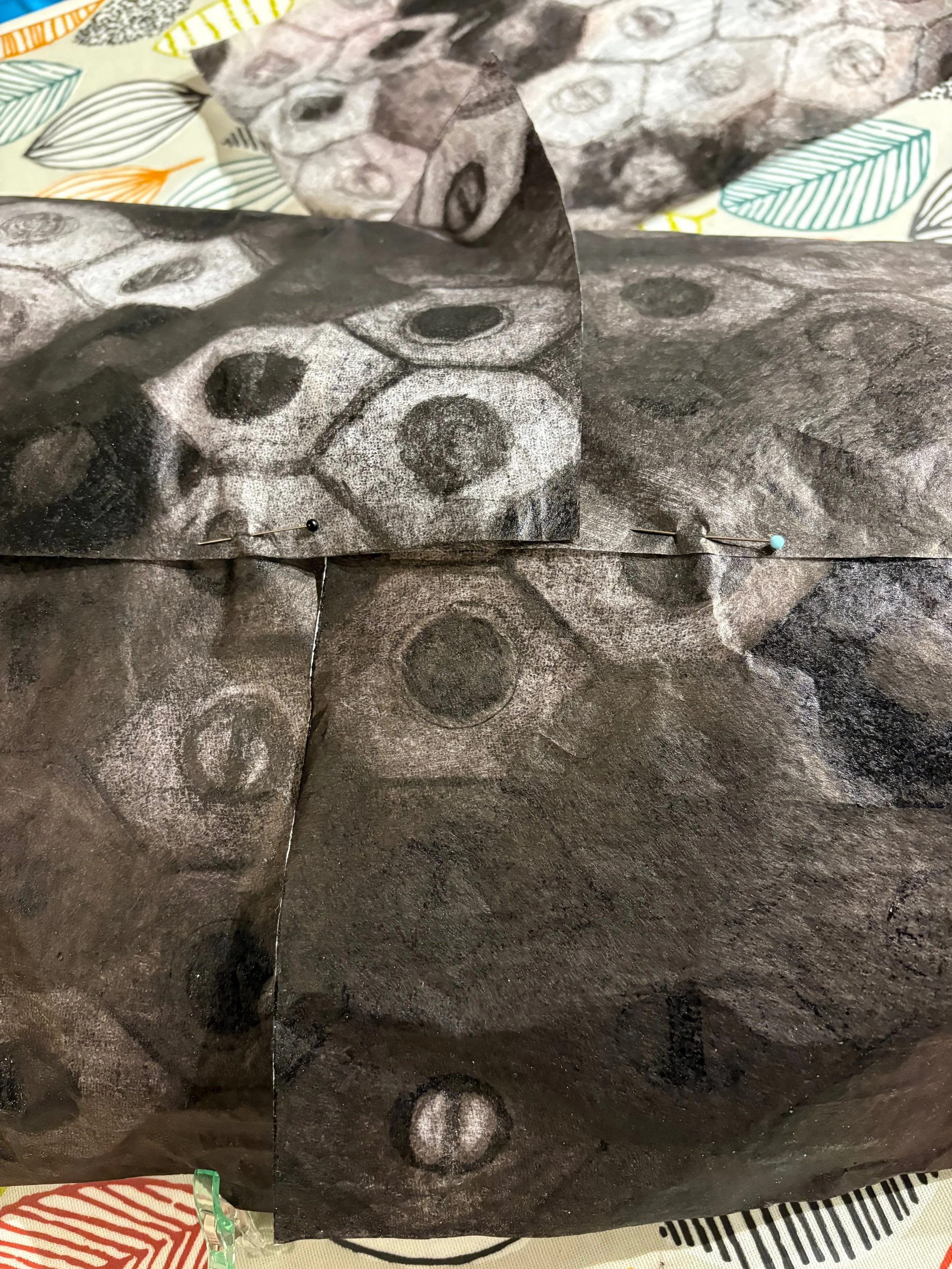
Mermaid Construction Stitching multiple skins together
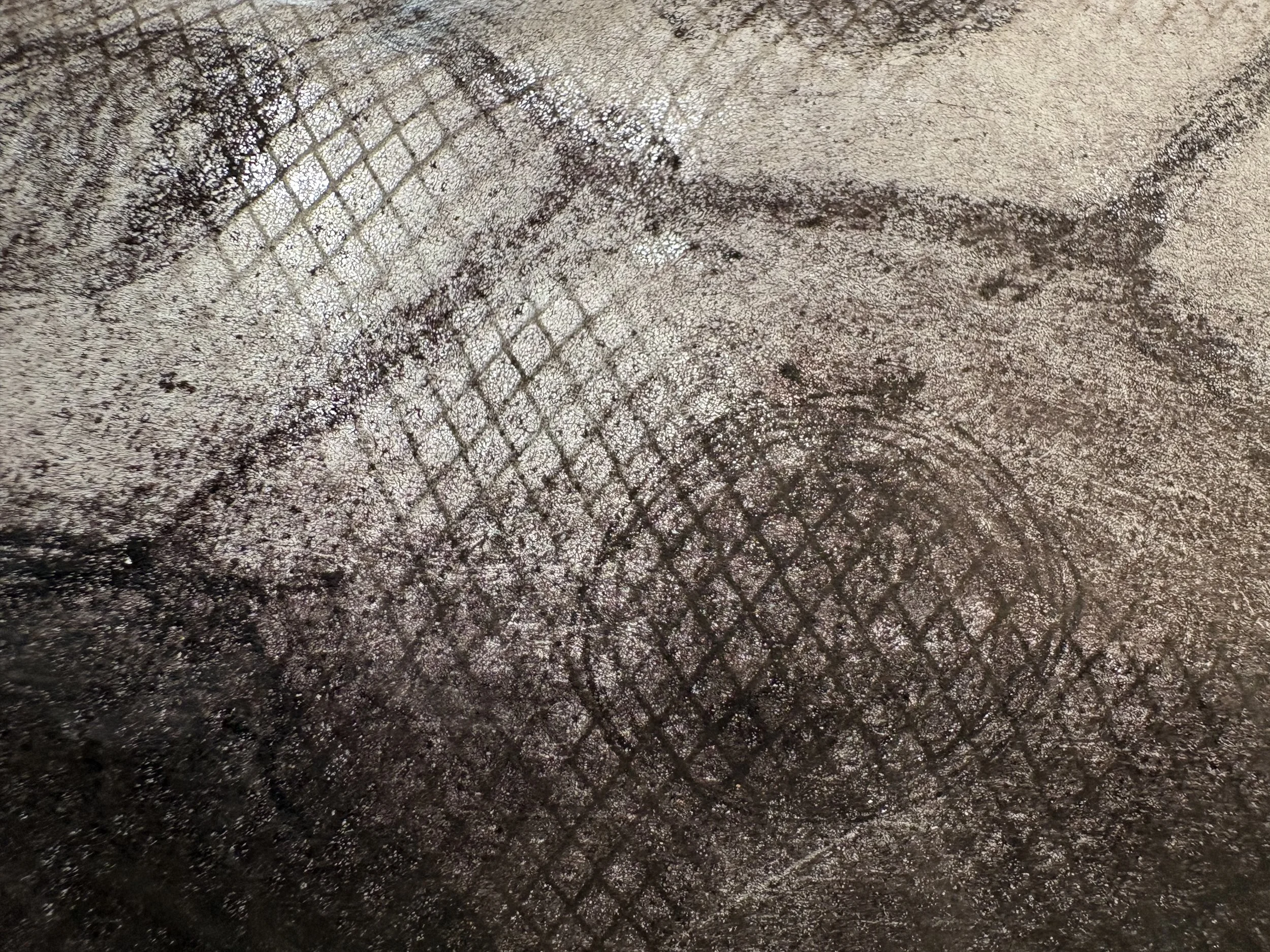
Mermaid Construction Close-up skin on metal form
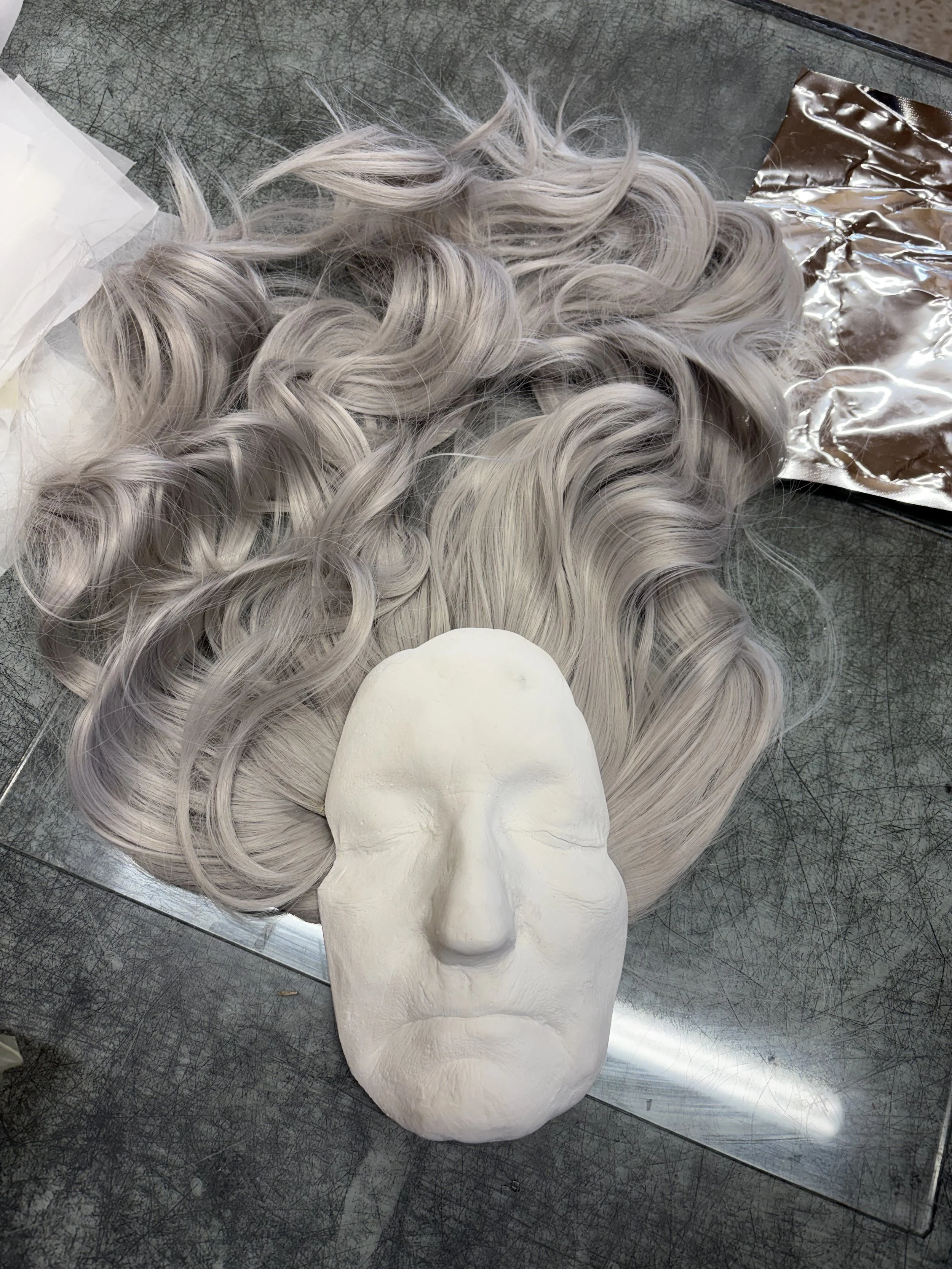
Mermaid Construction Testing plaster cast and hair design
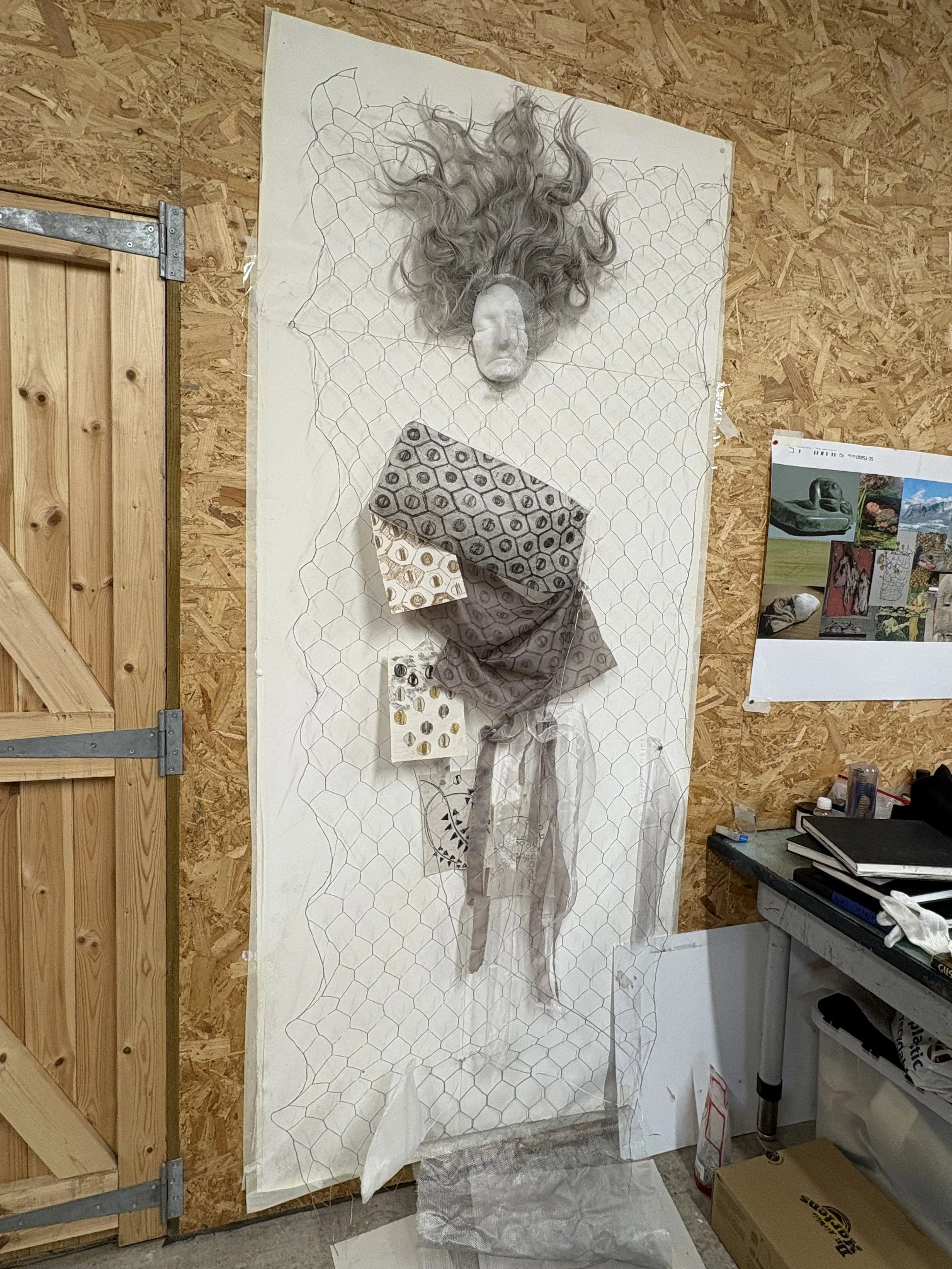
Mermaid Construction Testing ideas for skin pattern
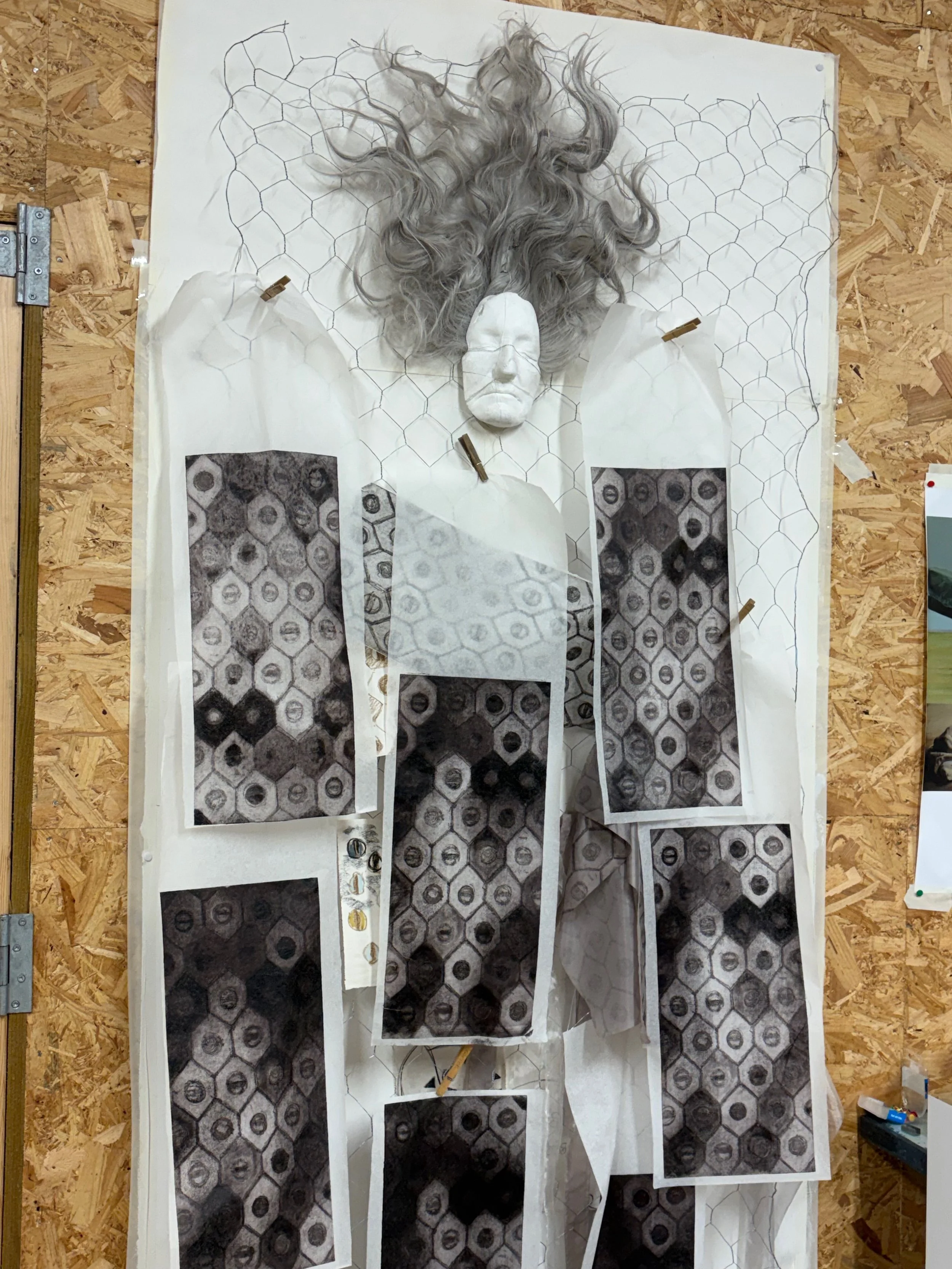
Mermaid Construction Multiple skin patterns
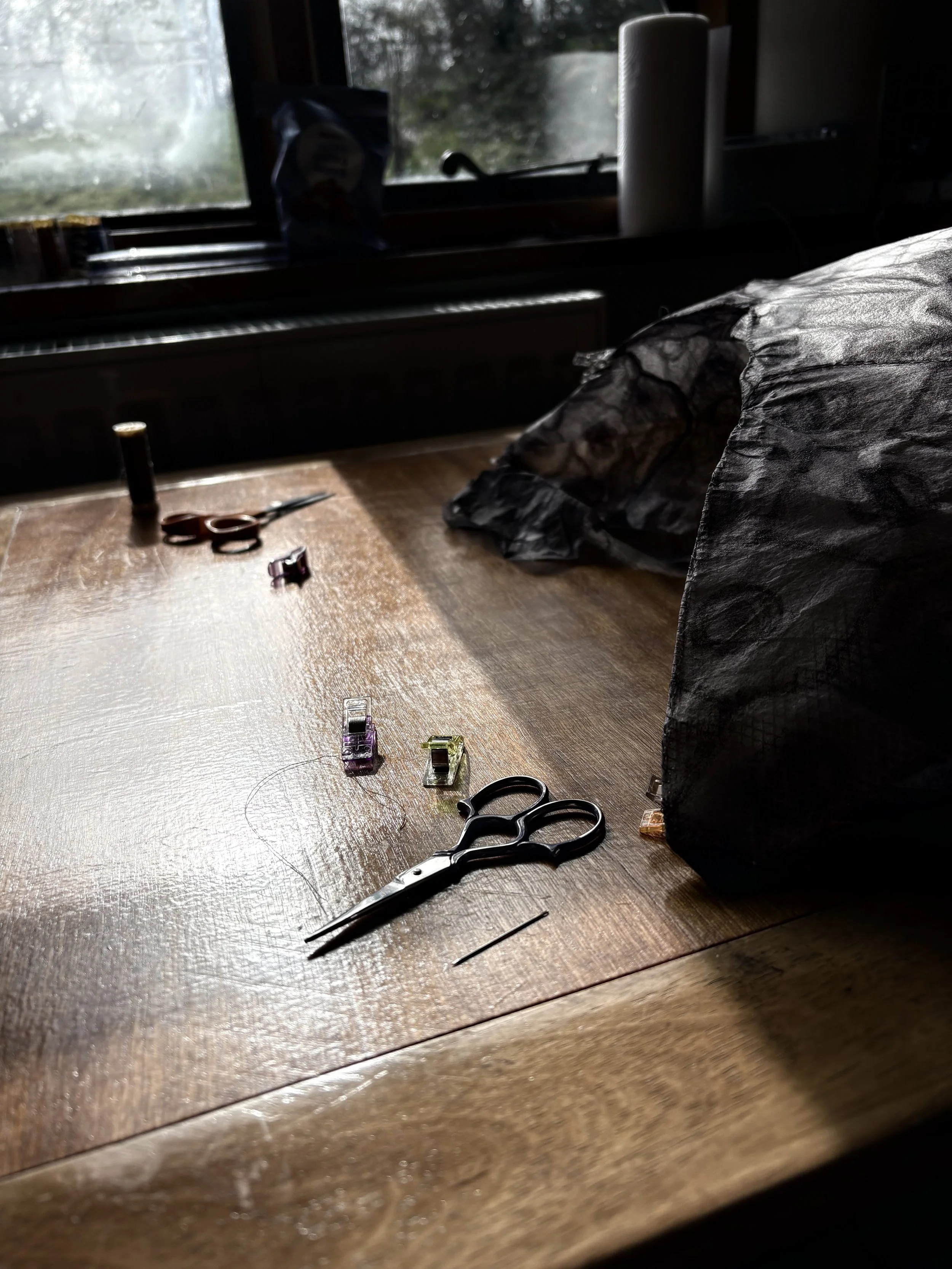
Mermaid Construction Stitching around the tail
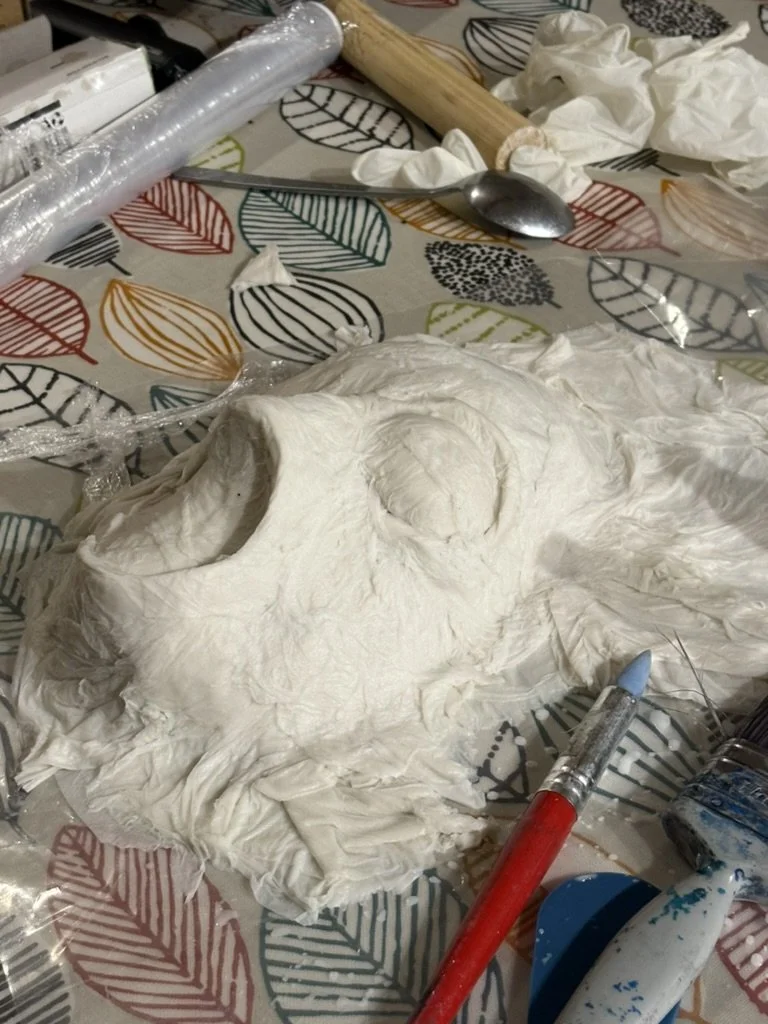
Mermaid Construction Face mask testing 1
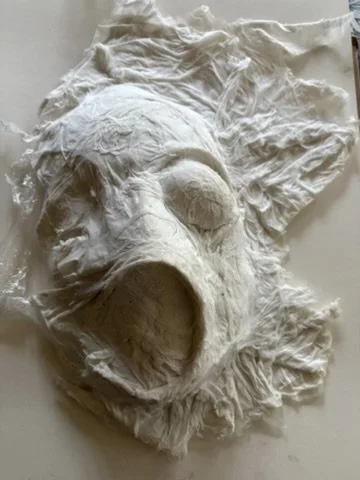
Mermaid Construction Face mask testing 2
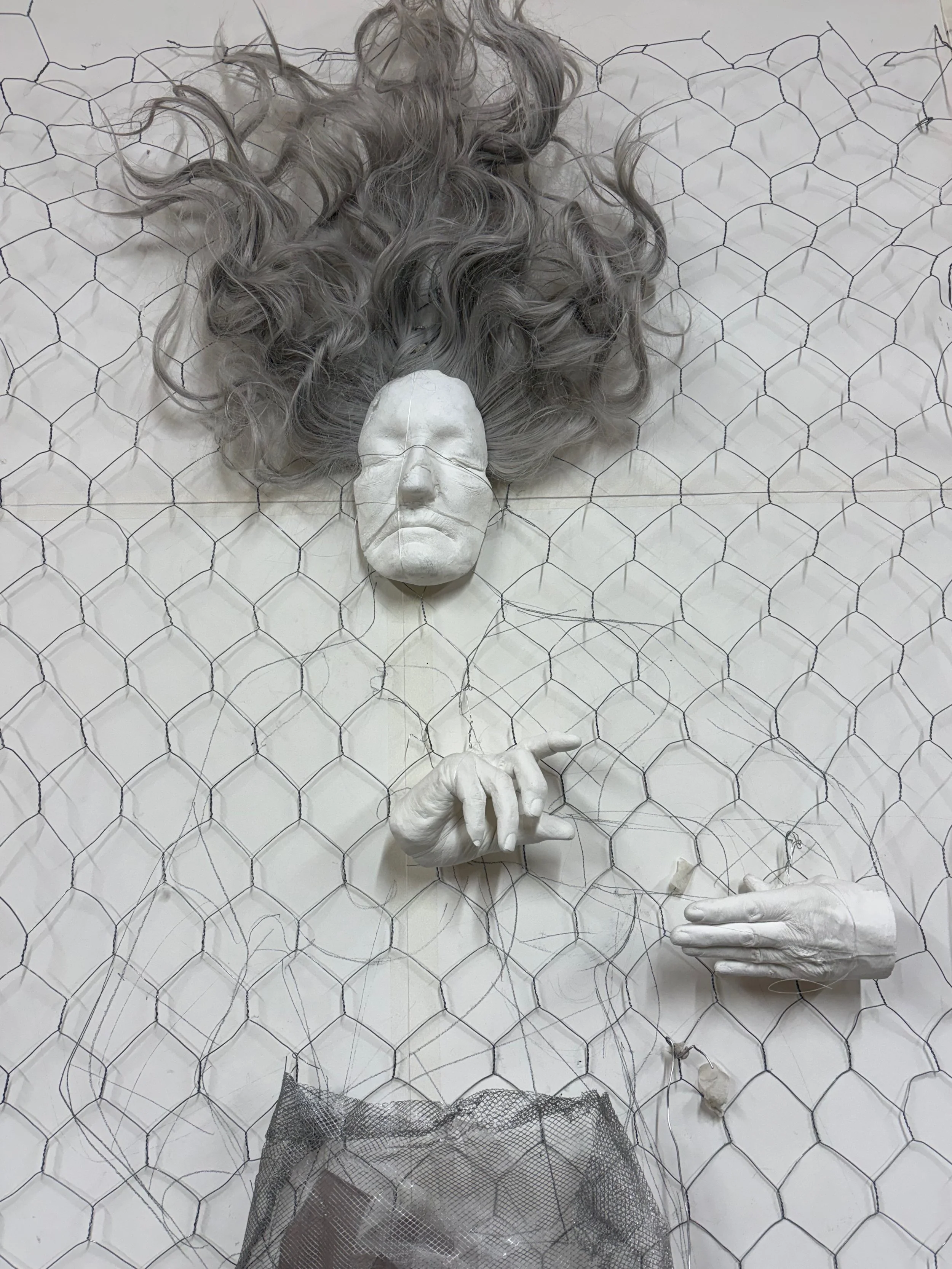
Mermaid Construction Testing plaster hand positions
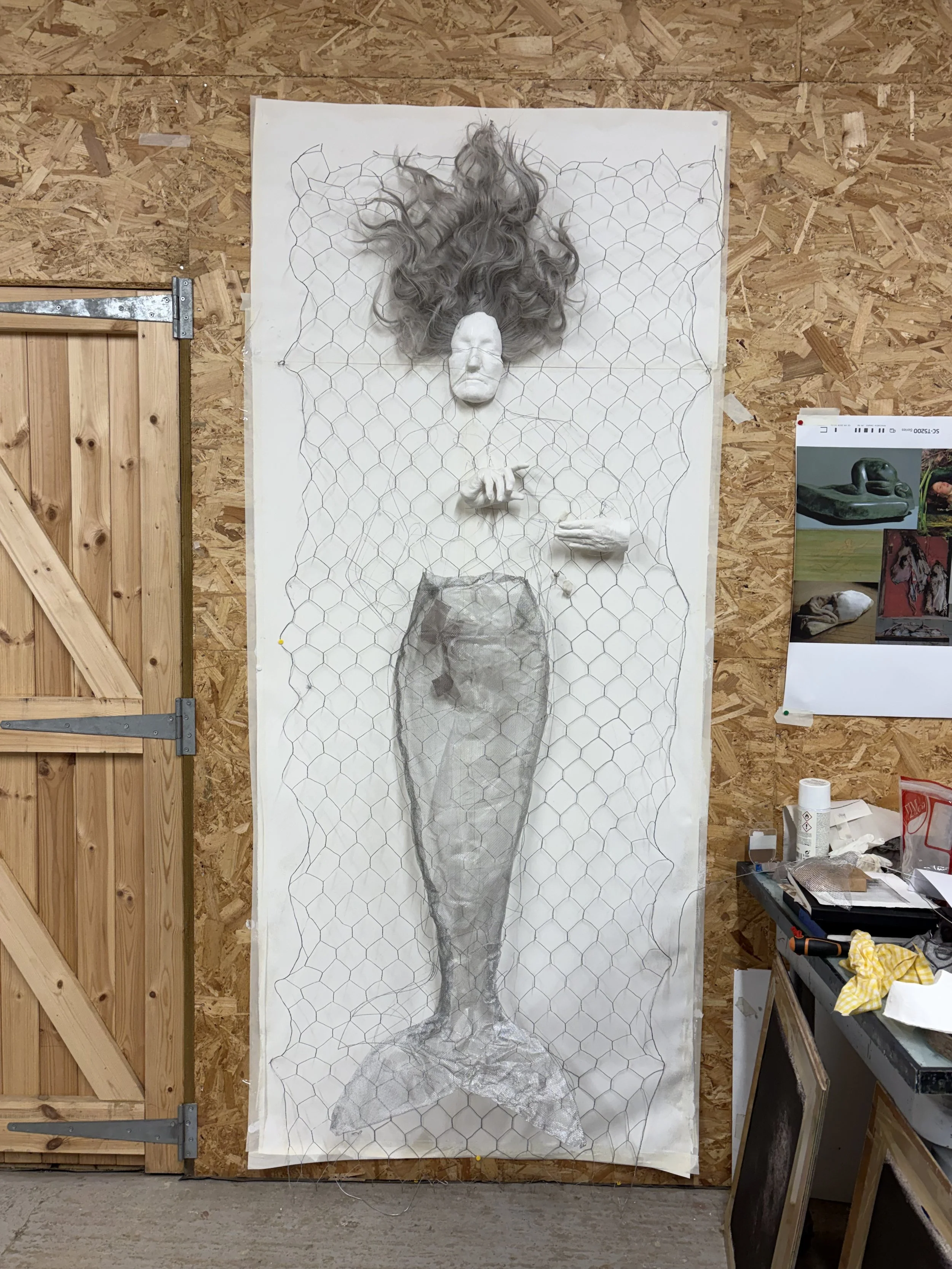
Mermaid Construction The bare bones of the mermaid
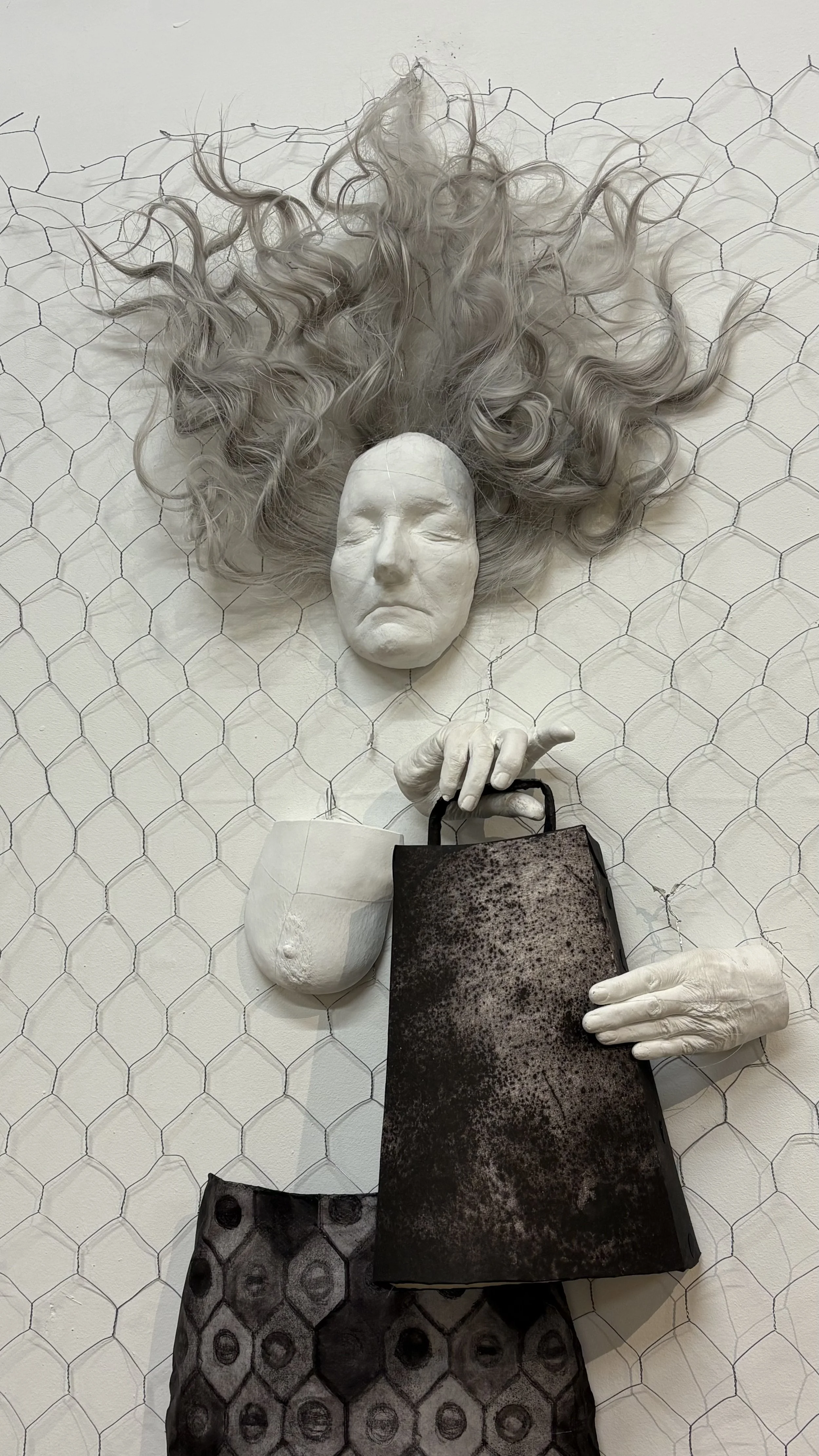
Mermaid Construction Mermaid with a model Marden Bell 2
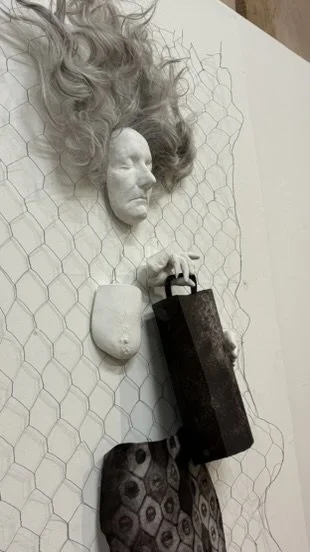
Mermaid Construction Mermaid with a model Marden Bell 3
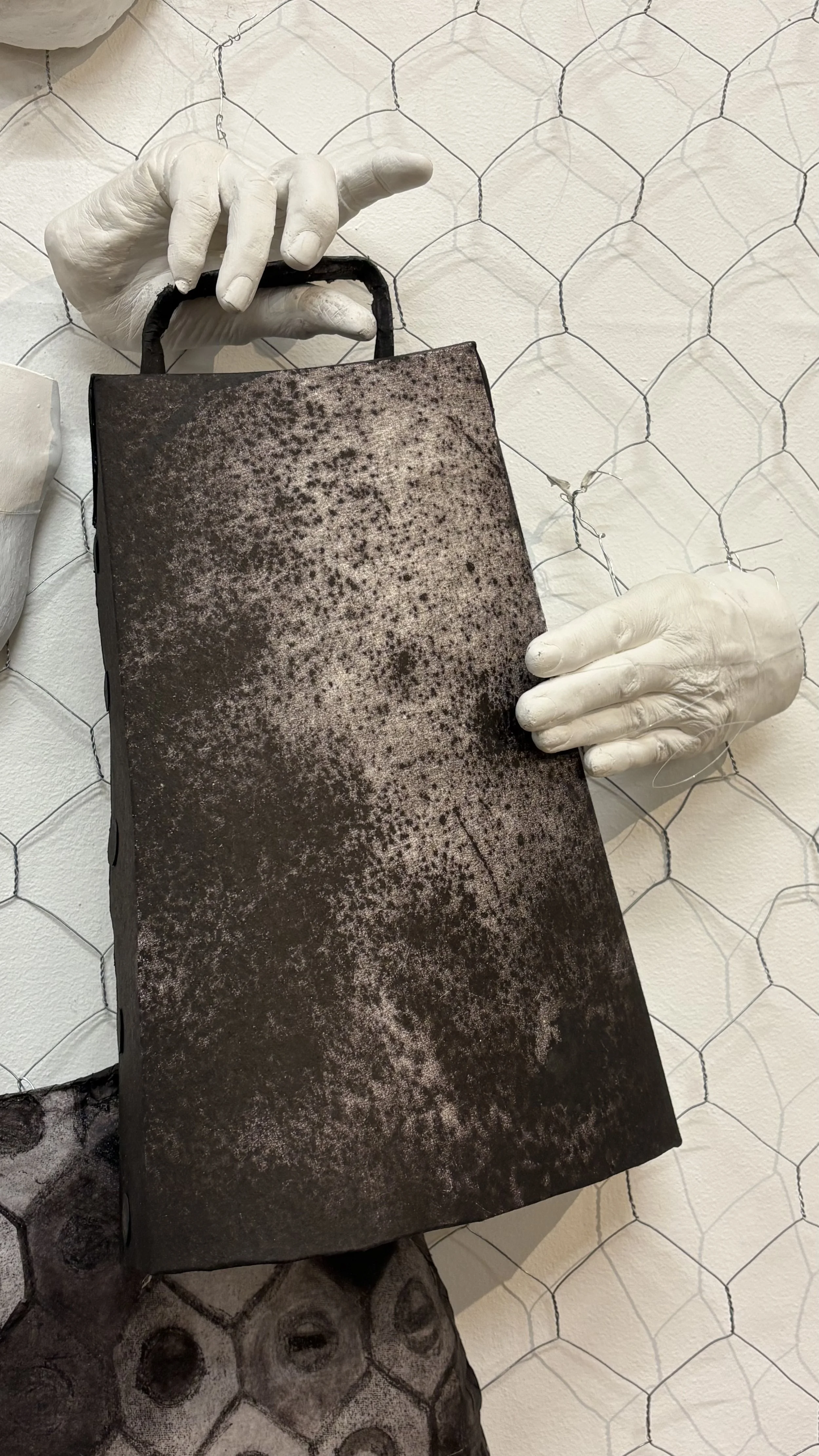
Mermaid Construction Close up of model Marden Bell
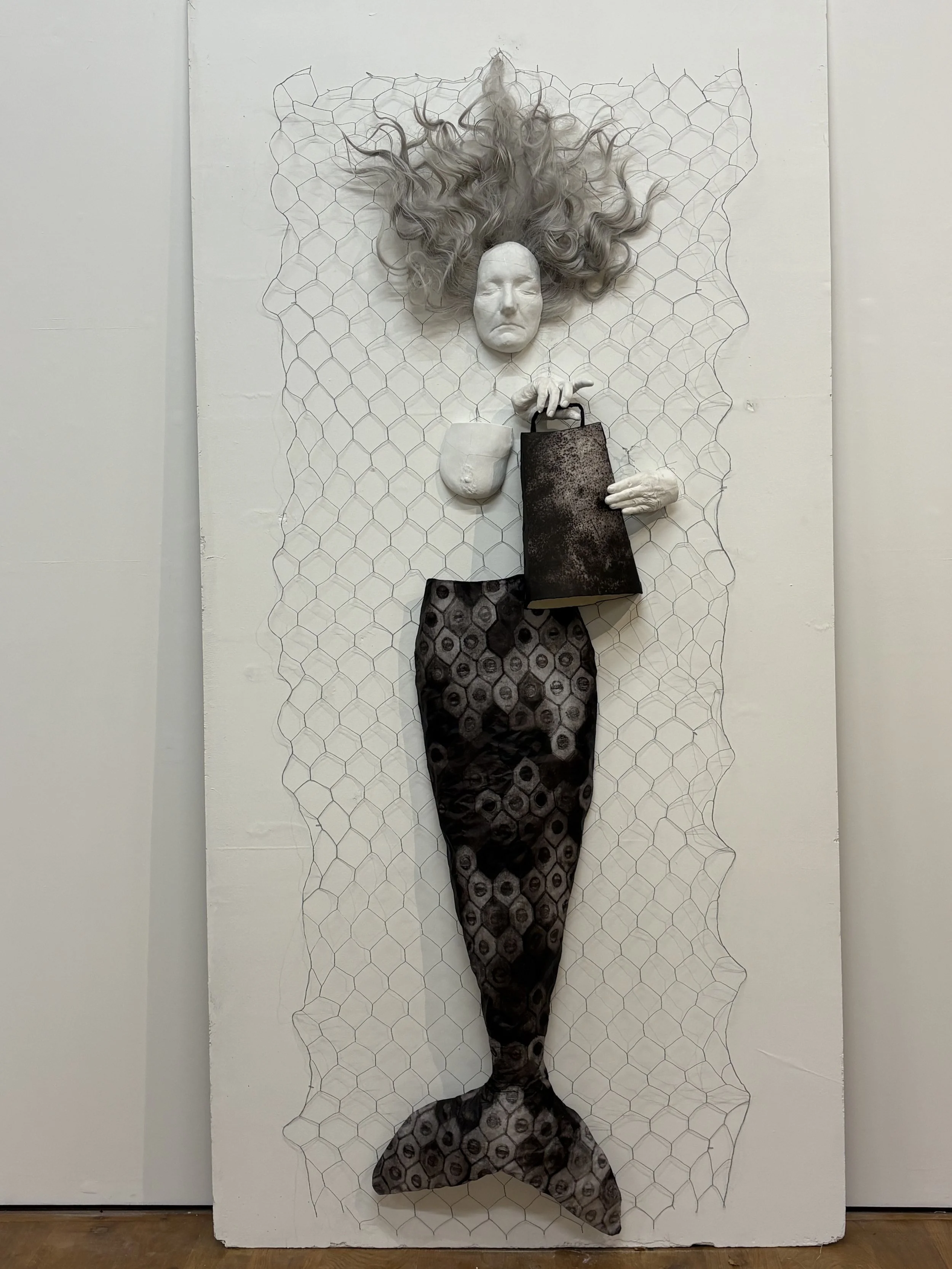
Mermaid Construction Mermaid with a model Marden Bell 1
Installation
Footage was captured at the confluence of the River Lugg and Hindwell Brook, with audio recorded outside Marden Church layered onto the film. Projected onto the assembled sculpture of the Marden Mermaid on the gallery wall, the work uses subtle masking techniques to create the impression of the Mermaid submerged beneath the water’s surface — dispersed, silent, and still.
But what about Sidney Nolan? After all, this was his house, and it was through his trust that I was able to be in Presteigne. I admit I felt overwhelmed at the thought of engaging directly with his work, so I set that aside for a time, choosing instead to immerse myself in Rodd Court and absorb its atmosphere. This approach led to two valuable outcomes.
Rodd Court is a large, mostly unoccupied property, a beautiful example of Jacobean architecture, yet imbued with a sense of emptiness. I began by photographing its interior, drawn to its quiet atmosphere. It was not until curator Antony Mottershead showed me the Trust’s stored works that everything began to fall into place. Seeing Nolan’s work up close, simply catalogued and stored rather than formally displayed, I started to understand. Perhaps this informal encounter was what I needed to begin relating to the man behind the work. Here was a prolific artist, working energetically across multiple media, producing series upon series of paintings and prints. I found myself transfixed by his large monochrome spray paintings created at the Burren, County Clare, Ireland. Whether this connection arose from my own heritage or from a shared engagement with the Celtic landscape and its mythology, I’m not certain. Whatever the reason, it is an area of Nolan’s work I hope to explore and respond to in greater depth.
The Celtic Images
Two images from the series inspired by Nolan’s visits to the Burren and surrounding areas.
The next time I entered Rodd Court with my camera, it felt as though I could sense Nolan’s presence lingering in the space. Wherever I walked, I imagined his footsteps, saw where he might have sat and, somewhat unexpectedly, it was the traces of his daily ablutions that transfixed me. Was this the pull of water again, I wondered. My journey through the house became shaped by the absence of the artist who had once inhabited it. Searching for Sid became the focus of my on-site work. Meanwhile, my time in the print studio unfolded as a rich exploration of simple techniques. Where Nolan had used wax crayons, I turned to photocopies, creating crude photo-transfer plates. Printing and etching in the bright, spacious studio, I found myself completely absorbed.
Photo-transfer etching
A simple technique for transferring an image onto a plate for etching. It involves using a photocopy of a photo taken in Rodd Court, which is then transferred onto an aluminium plate with gum arabic and “BIG” ground. The plate is run through a print press to complete the transfer process. Once the photocopy is removed, the plate is baked hard, then etched in a copper sulphate saline solution. After etching, the ground is cleaned off, and the plate is printed using traditional intaglio methods.
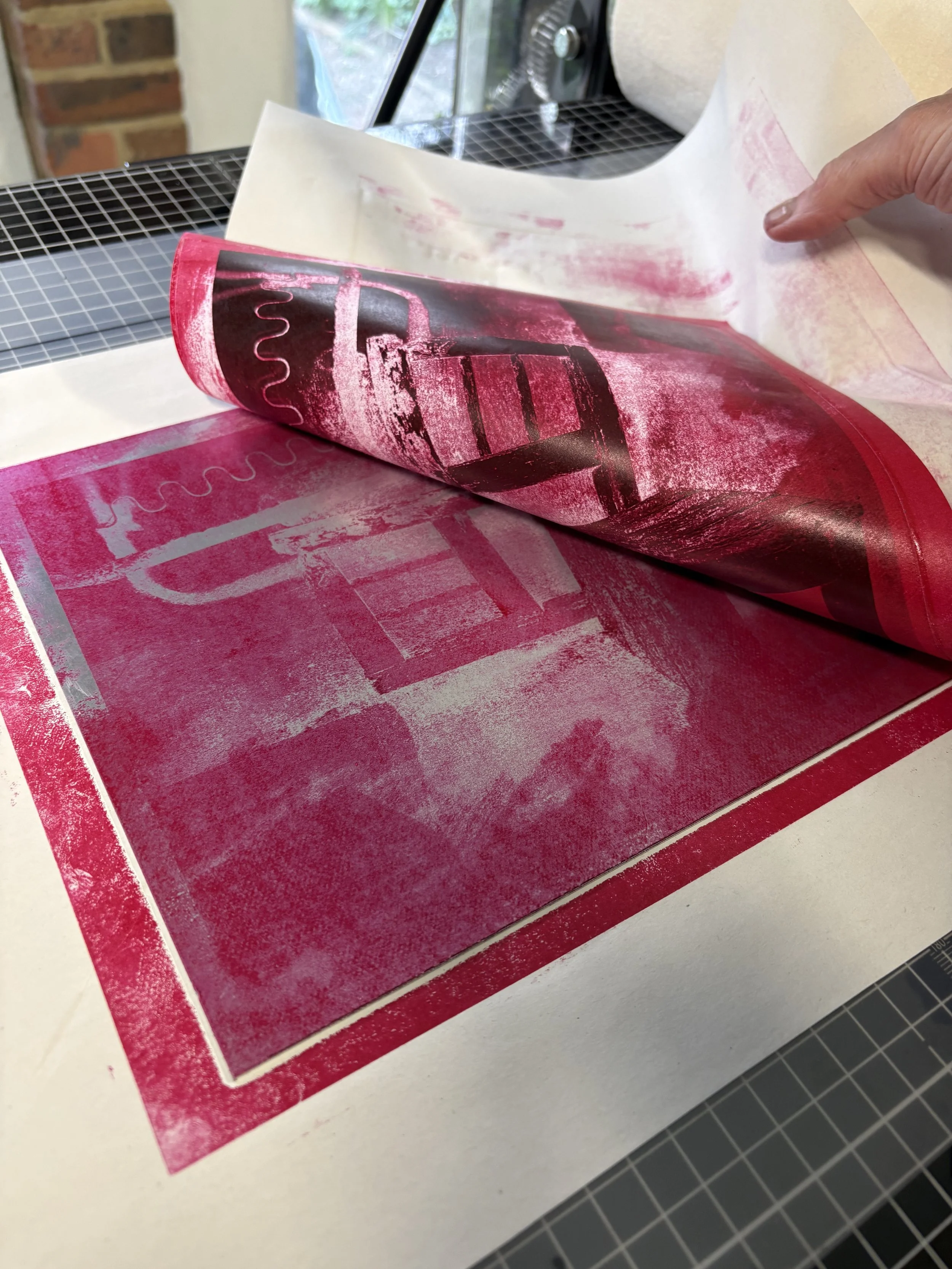
Photo transfer Applying the image onto an aluminium plate
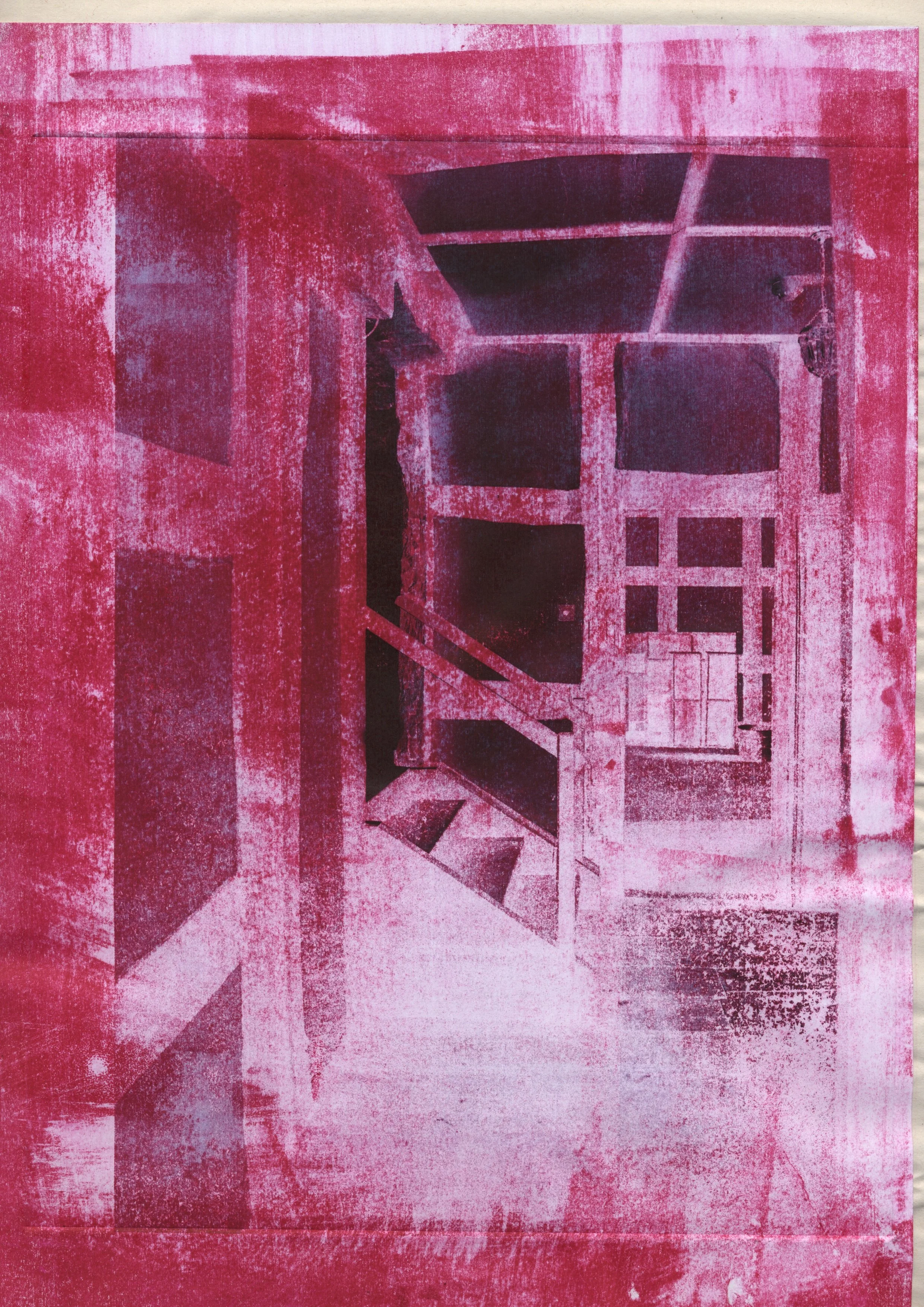
Photo transfer Applying the ground to the photocopy
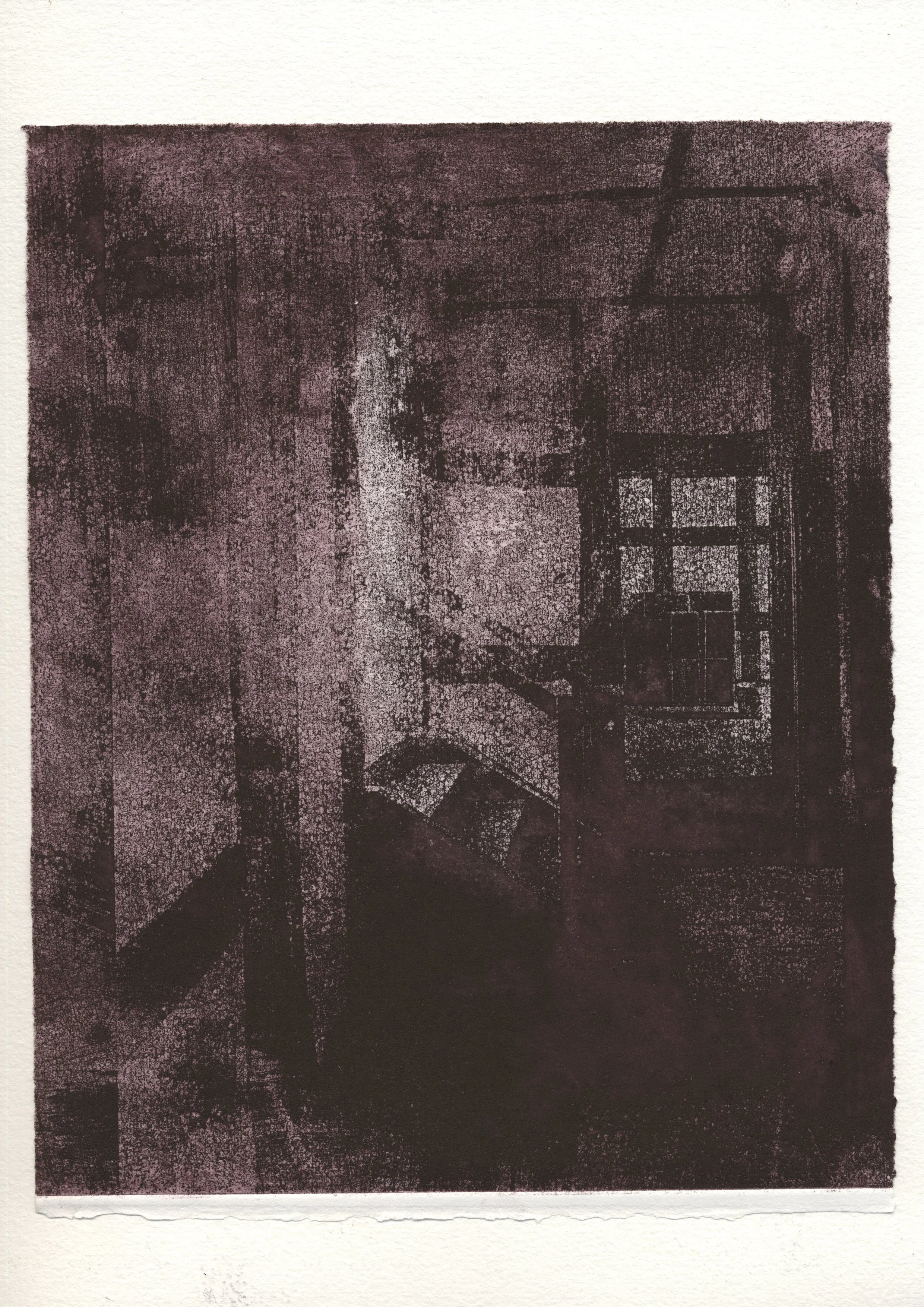
Photo transfer Resulting print 1
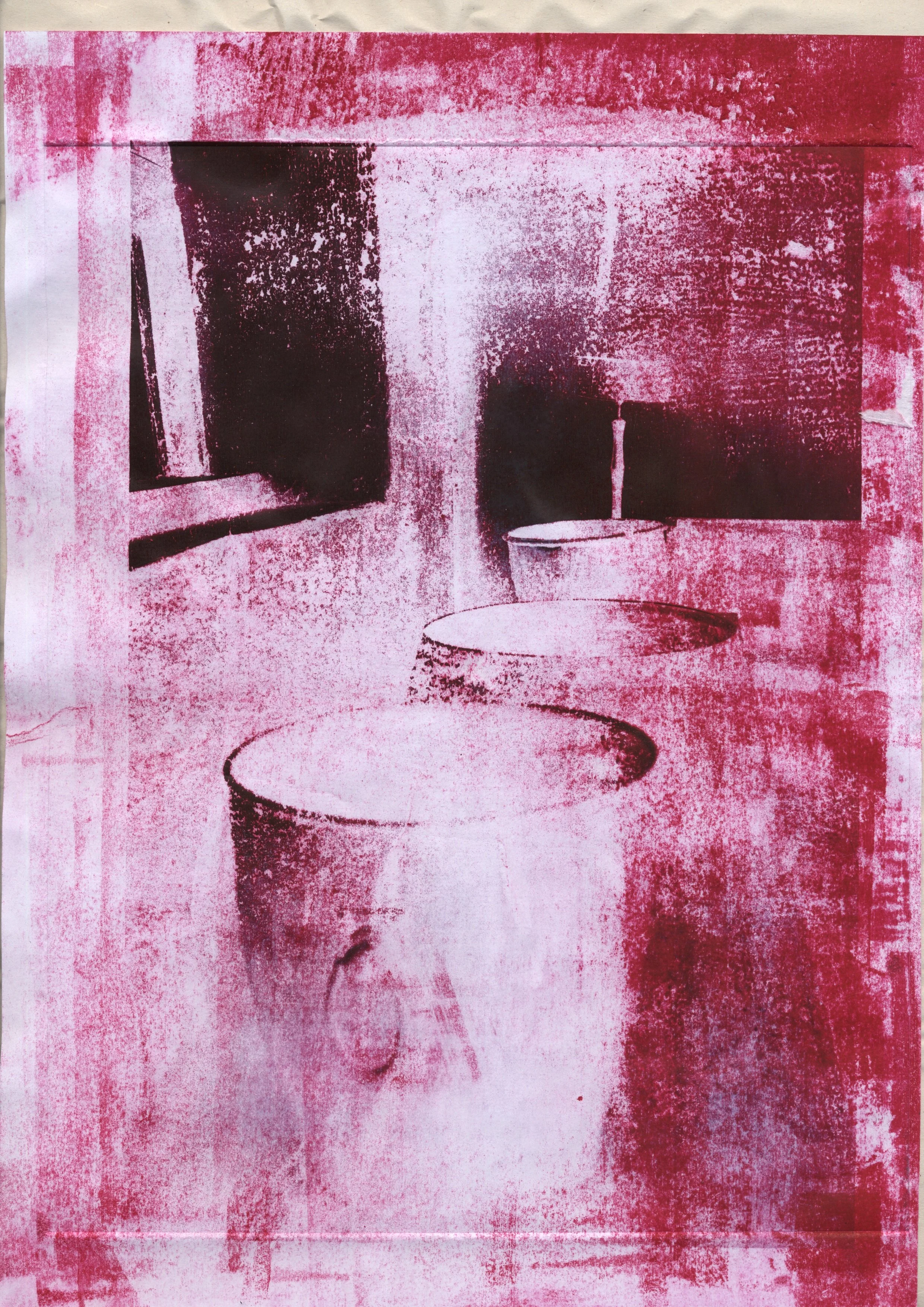
Photo transfer Applying the ground to the photocopy
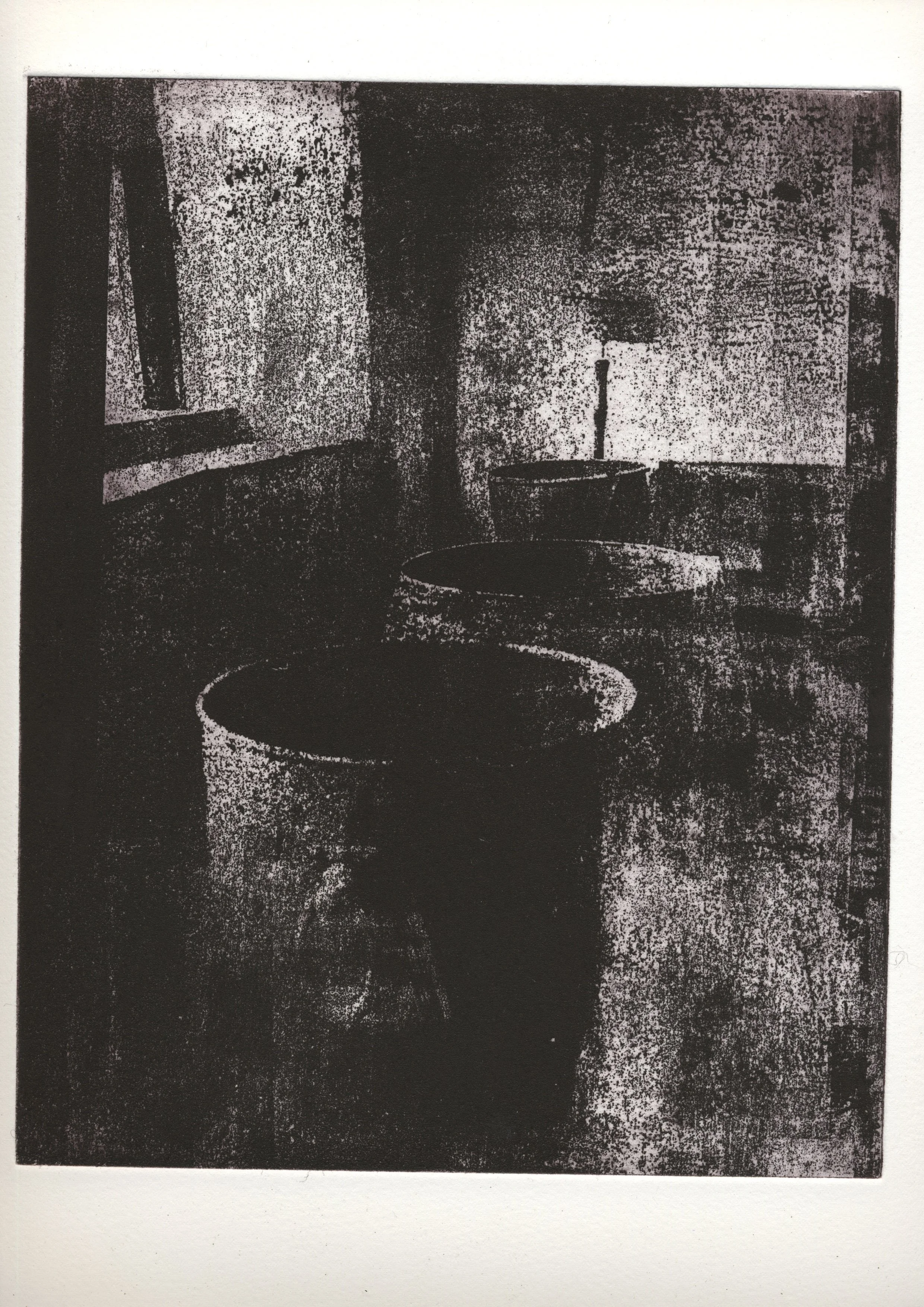
Photo transfer Resulting print 2
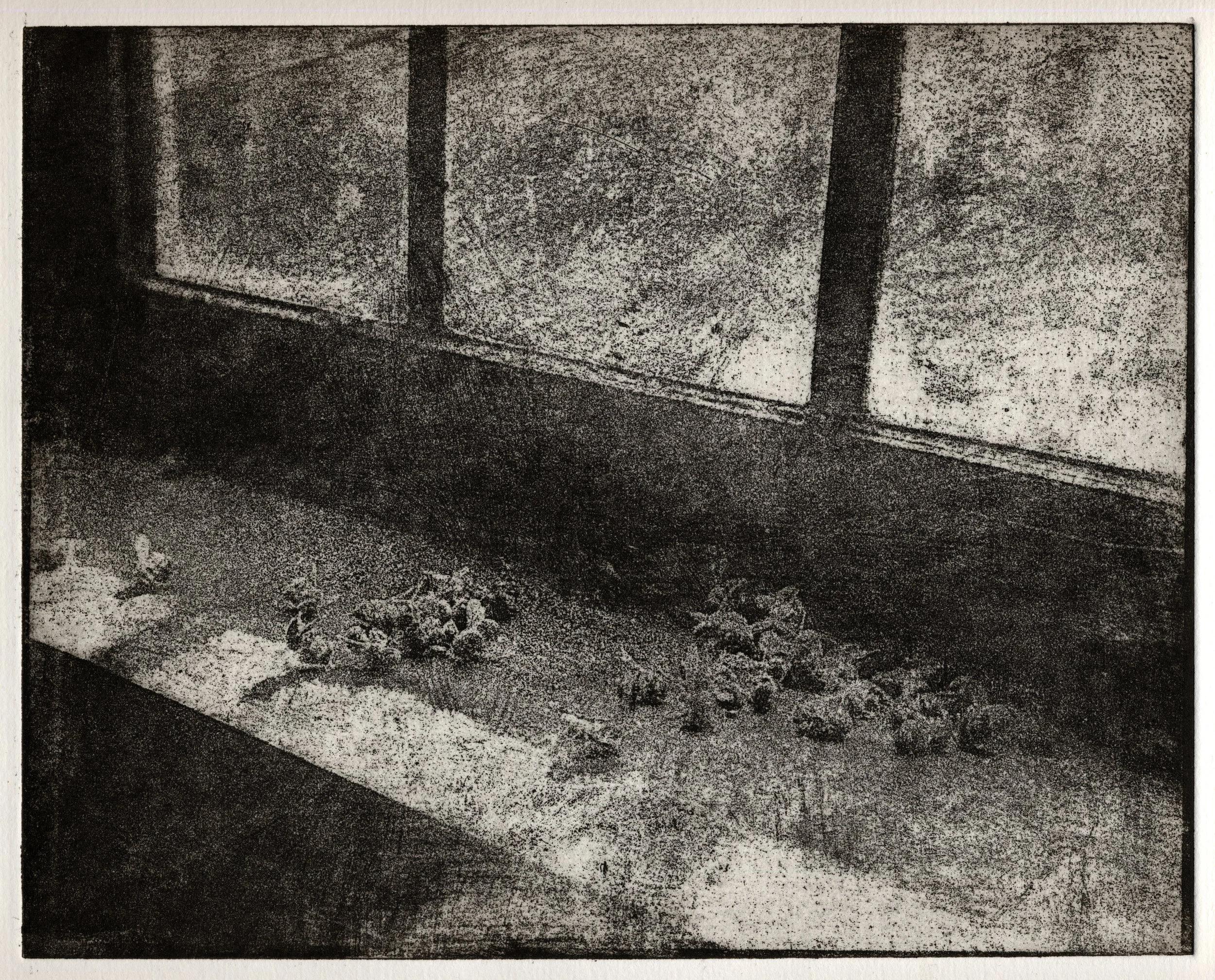
Photo transfer Resulting print 3
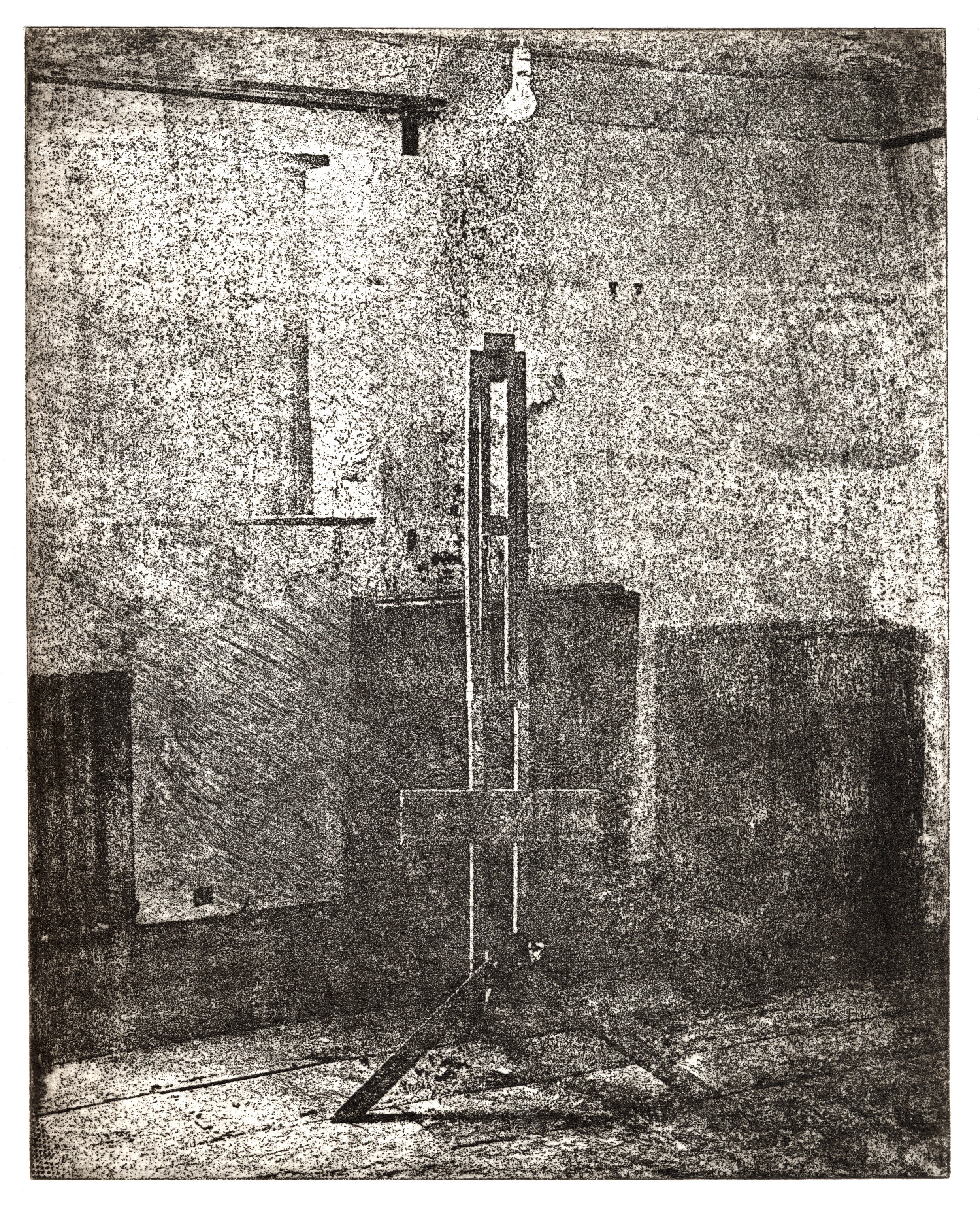
Photo transfer Resulting print 4
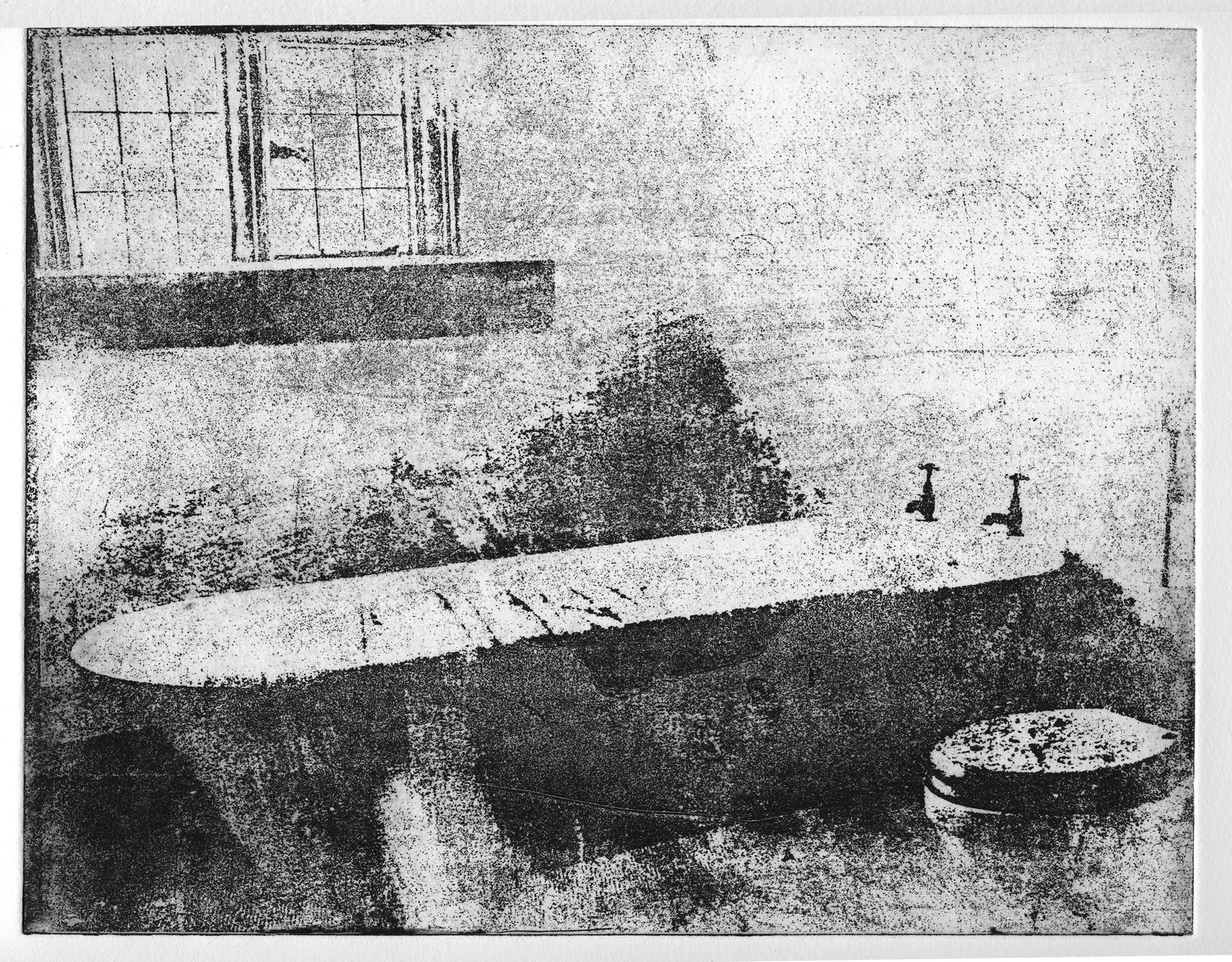
Photo transfer Resulting print 5
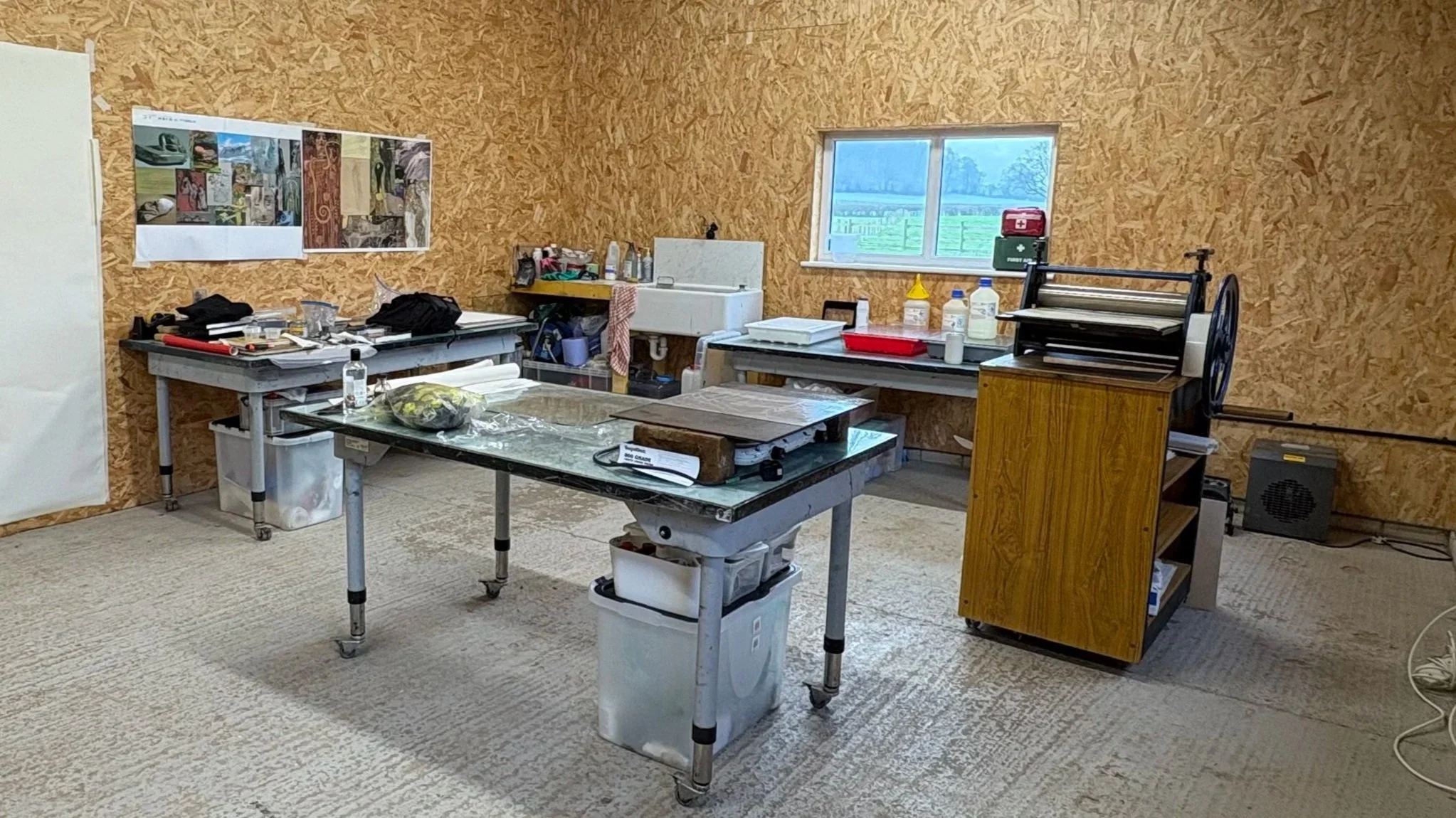
The Education Building at The Rodd Transformed into a light and spacious printmaking studio.
The corroded quality of my prints was a deliberate choice, not to illustrate literally, but to evoke a sense of nostalgia, as if glimpsed through time on a hot summer’s day. Like muslin draped across a window, softening and blurring what lies beyond, the surface obscures detail and invites a more intuitive, atmospheric way of seeing. A glimpse at a past no longer there but still sensed. Still enchanted with this imagery, I am currently working on a series of plates. Interestingly, whenever I veer towards the sophisticated photo-polymer method for transferring images onto plates, my heart sinks, and the excitement fades. I return to my original on-site images to avoid forgetting the essence of what I found and the ‘Lo Fi’ raw process I developed during my stay at the Rodd.
Soapground Etching
Applying soapground directly onto steel plates is a simple etching technique, akin to sketching outdoors. Once the ground is applied, the plates are carefully transported to the studio for etching in a copper sulphate saline solution. The soapground functions as an acid-resistant layer, enabling different areas to be bitten at various times and allowing for tonal variation. The final image is created through traditional intaglio printing on a press.
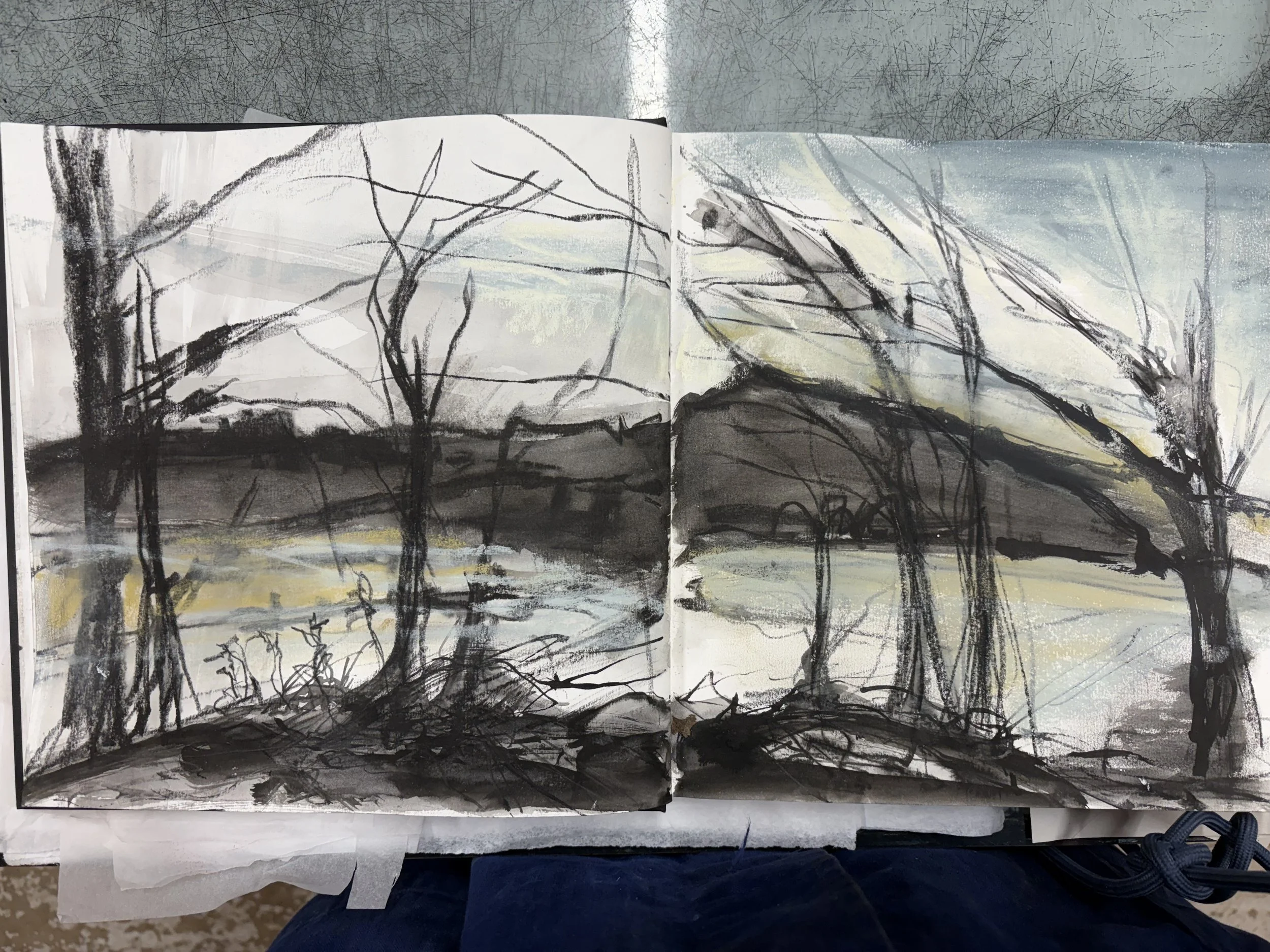
Soapground Etching Preliminary sketch
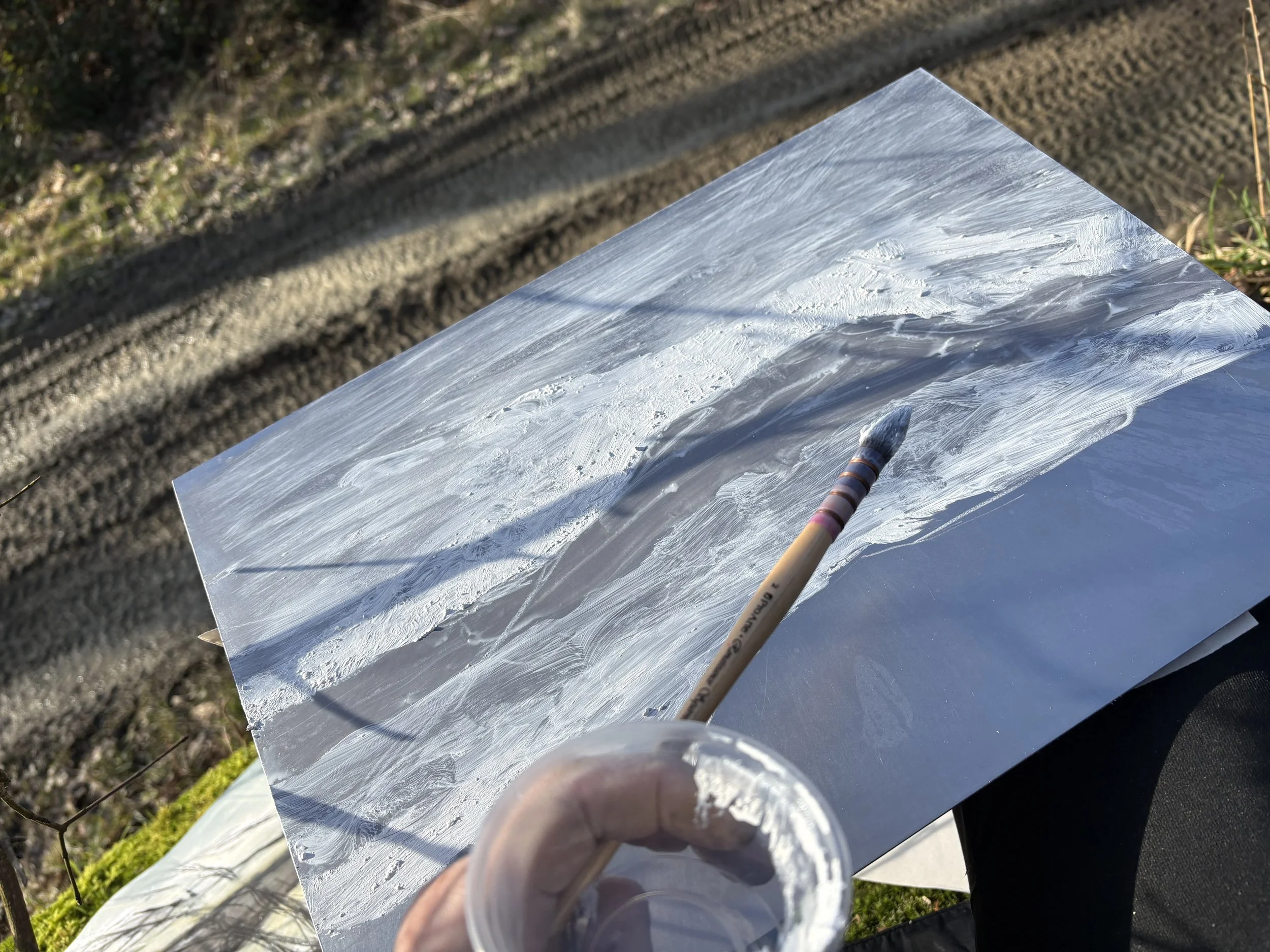
Soapground Etching Sketching onto the plate with soapground
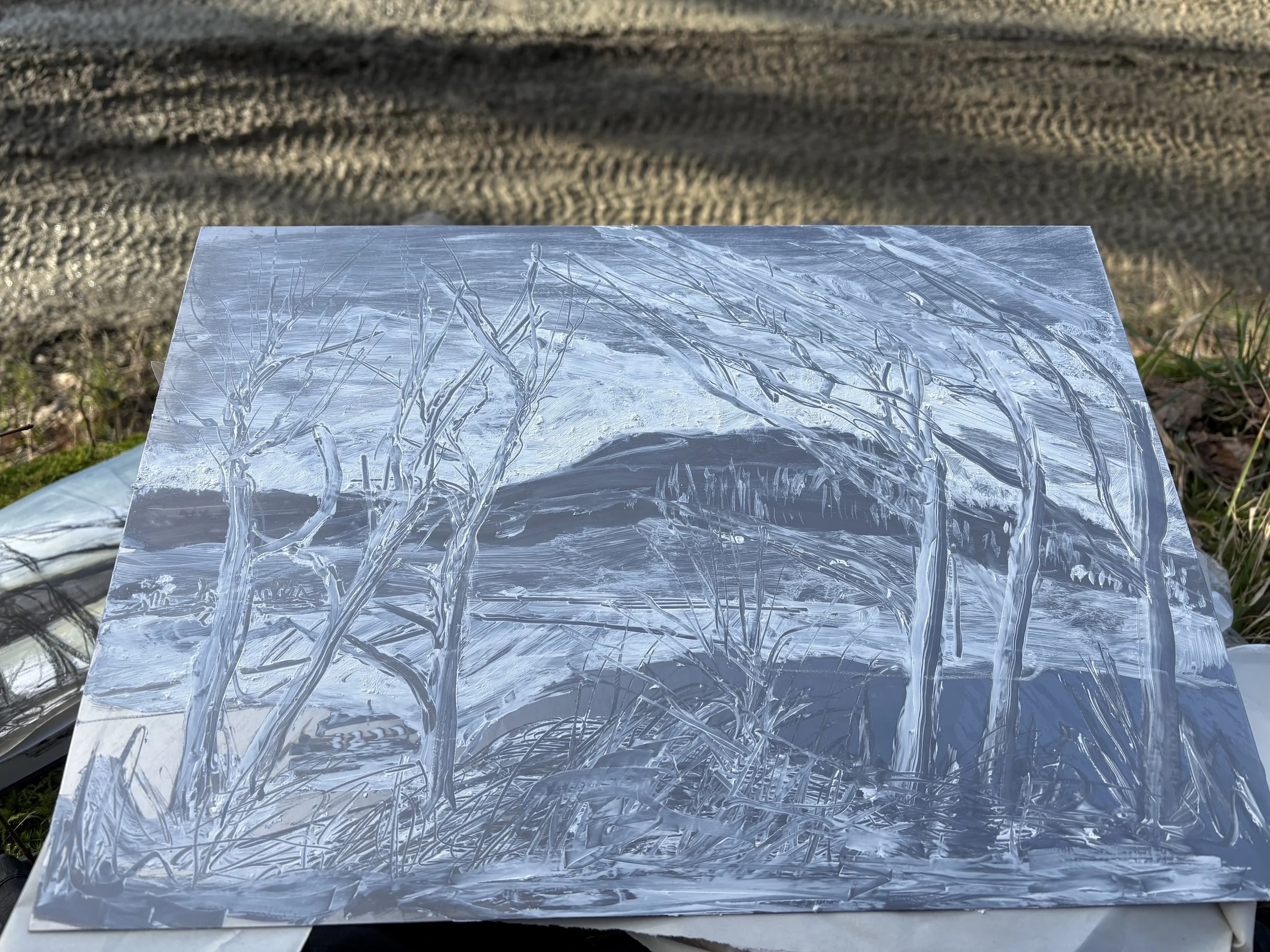
Soapground Etching Soapground image on the plate
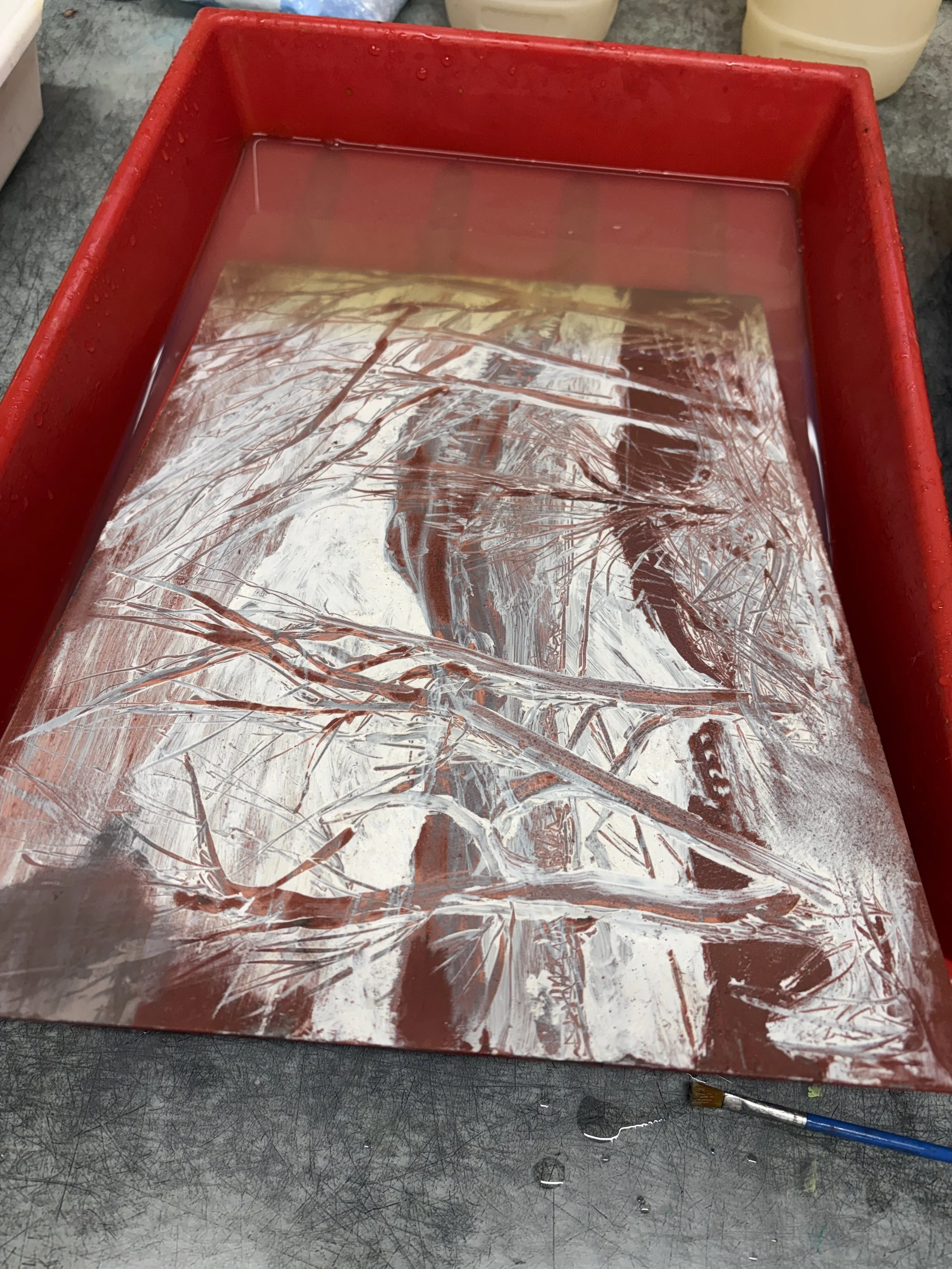
Soapground Etching Etching the steel plate
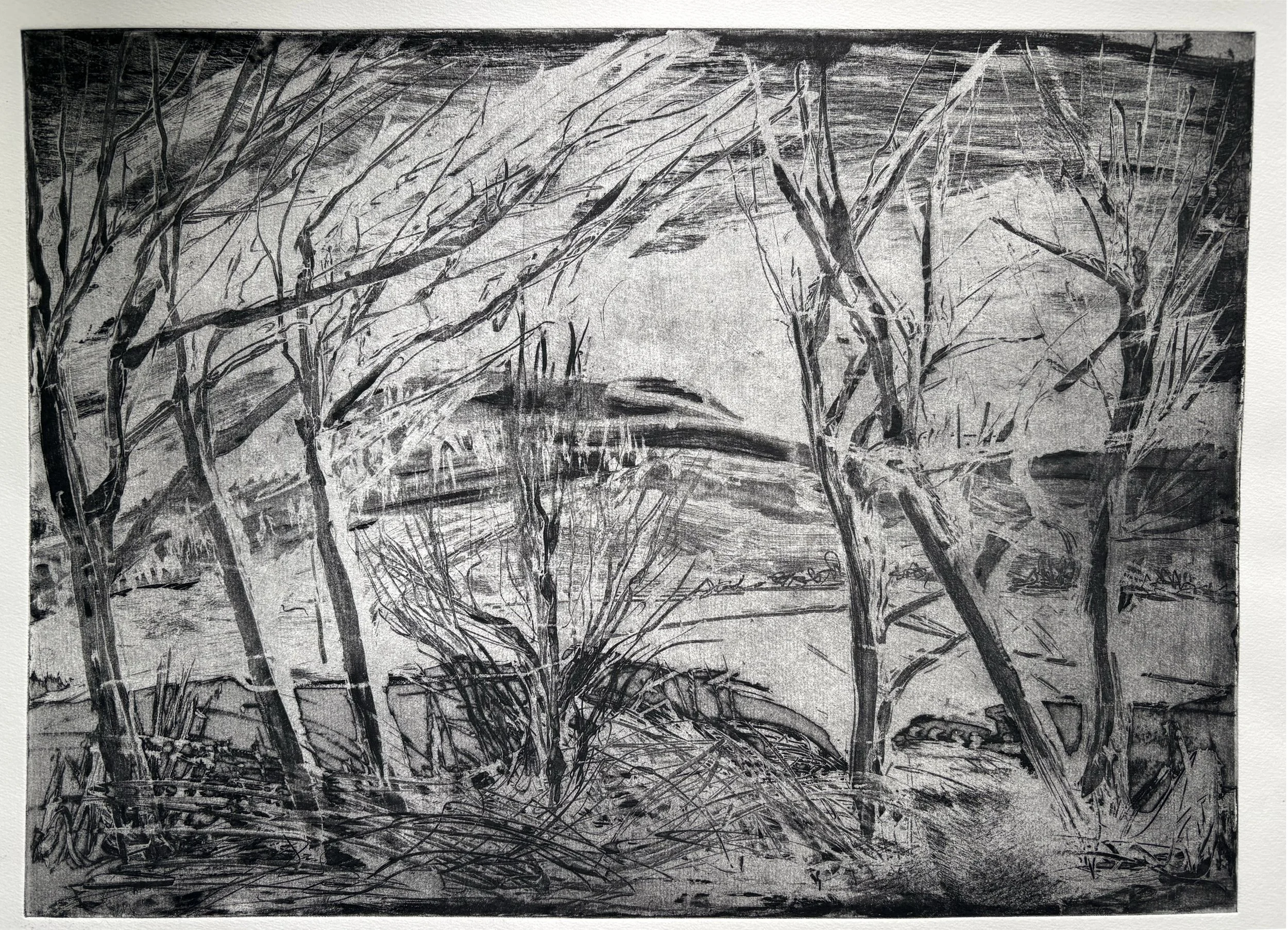
Soapground Etching First stage print on paper